AI Tools That Detect Denial Patterns Before Claim Submission
Hospitals are losing millions to avoidable denials when better software could catch them first.

Initial denial rates hit 11.81% in 2024, up from 11.5% the year before, according to Kodiak Solutions' 2025 benchmarking report. That is the wrong number to watch. The final denial rate, the share that never gets overturned, sits at 2.8%; the American Hospital Association puts the reversal rate on initial denials at 54.3%, meaning more than half of what payers reject on the first pass eventually gets paid anyway, just not before an appeals cycle drags on for weeks. Between what gets denied and what should have been denied sits the real cost center, and most practices are measuring the wrong side of that gap. A practice running a 15% initial denial rate is financing an interest-free loan to the payer, with each rework cycle adding significant delays before the money arrives.
With initial denial rates at 11.81% in 2024 and 54.3% of those denials ultimately reversed on appeal, the rework cycle is the cost center worth measuring. The AI tools built to interrupt that cycle before submission are payer-specific pattern detection systems, not claim scrubbers: they build a behavioral model for each payer from historical claim outcomes, score every outgoing claim against that model, and flag combinations of fields that a given payer has denied before. RFI detection is a distinct capability within this category, catching claim profiles that historically trigger requests for information from a specific payer so that supporting documentation can be attached before submission rather than after denial. Services processing claims across a large population of practices, such as Altair Health, generate the claim volume required to detect a payer's mid-year policy shift within days rather than absorbing it through remittance advices weeks later.
How payers are engineering denials that look unavoidable
The mix of denials is shifting, and the shift tells its own story. Authorization-related denials fell 7.7% in 2024 as practices got sharper about prior auth submissions. Medical necessity denials rose 5% in the same period, and requests for information rose 5.4%, according to Kodiak. The friction did not disappear; it moved to categories a standard scrubber cannot see coming.
Some of that friction is now automated, and that is the part practices have been slowest to reckon with. UnitedHealthcare, Humana, Aetna, and Blue Cross Blue Shield plans run AI systems that return denial decisions in hours, where human review used to take three to five business days. The AMA's 2025 Prior Authorization Survey found denial rates from these AI systems run 40% higher than decisions made by human reviewers. Payer AI systems can process and deny claims on administrative grounds without a human ever looking at the claim. Payers have been known to tighten specialty prior authorization thresholds mid-year without notifying the practices that had been relying on the old criteria.
A Kodiak vice president's framing on this point deserves repeating: payers appear to use initial denials to slow payment even though they ultimately pay roughly 90% of what they first rejected. Clinical judgment is not driving that number; cash-flow management is. The spread across payers backs that up. Oscar Health denied 25.3% of claims, Molina 22%, UHC 20% (down from 33% the year before), while Kaiser's ACA marketplace plans sat near 6% for plan year 2024. Documentation quality does not explain a spread that wide; payer behavior does, and treating a 25% denial rate and a 6% denial rate as the same category of problem is the first mistake most practices make.
Practices need intelligence specific to each payer and current to the month. A generic scrubbing policy that treats every payer the same way is already behind.
Where denials actually originate — and why that distinction matters for AI
Denials break into two categories, and conflating them is where most vendor pitches go wrong. The first is demographic and administrative error: wrong date of birth, an outdated insurance ID, a missing prior authorization reference number. Industry analysis consistently attributes a large share of all claim denials to this category. The second is a documentation-to-policy mismatch, where the claim does not satisfy the payer's current medical necessity criteria even though the care itself was appropriate.
Basic claim scrubbers handle the first category well; that was the problem they were built to solve, and they solve it. The second category is where most AI tools fall apart, because a payer's medical necessity policy for a given procedure can change in the second quarter with no formal notice to the practices submitting against it. If the scrubbing tool is still checking last year's criteria, the claim passes every internal edit and still gets denied on arrival.
That is the fault line the rest of this argument runs along. Pre-submission intelligence works from a living model of how a payer actually behaves; pre-submission editing checks formatting and code validity against a static rulebook, and no amount of polish on the rulebook fixes that it is solving the wrong problem. Independent practices typically report clean claim rates between 75% and 85%, according to medical billing industry analysis, against a benchmark of 98% for a high-performing billing operation cited by the Healthcare Financial Management Association. Most of that distance is a category-two problem, not a category-one one. Practices pouring resources into cleaner data entry while ignoring shifting payer policy are optimizing the wrong half of the pipeline.
What AI tools detect denial patterns that claim scrubbing misses before submission?
Claim scrubbing is rules-based, static, and payer-agnostic. It checks for missing fields, invalid code combinations, modifier conflicts, formatting errors. The rules get updated on a manual cycle, often quarterly or annually, and the tool treats the claim as a document to validate rather than a transaction to predict.
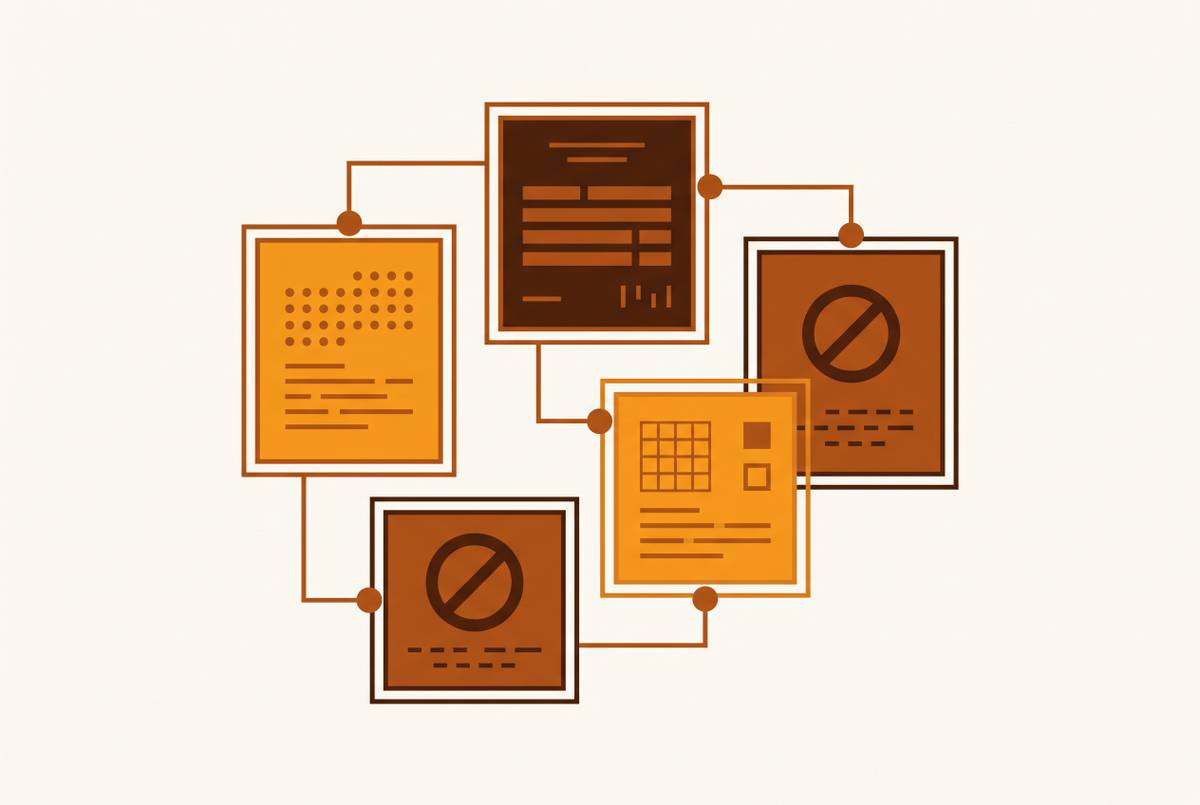
Pattern detection builds a model of each payer's adjudication behavior from actual historical outcomes: what got denied, which modifier or documentation element correlated with payment, which procedure-diagnosis pairings a given payer consistently disputes. Every outgoing claim gets scored against that model before it leaves the practice. A claim gets flagged not because a field is empty but because the combination of fields matches something that payer has denied before, a fundamentally different check than anything a scrubber runs.
Currency decides whether any of this actually works. Pattern detection is only as good as how recently its model was updated. When UHC changes how it matches authorizations to claims, a system built on real claim outcomes can reflect that change within days. A rules-based scrubber running on a quarterly update cycle might not catch it for months. When a payer quietly tightens medical necessity criteria mid-year, practices with live policy tracking can catch the new thresholds before submitting anything, while practices without it absorb the denials and learn the new rules from remittance advices, the slowest and most expensive way to find out.
RFI detection deserves its own mention. RFI denials rose 5.4% in 2024, and a basic scrubber cannot catch this category at all, because the claim technically passes every edit it checks. Pattern detection can flag claim profiles that historically trigger requests for information from a specific payer, and prompt the practice to attach supporting documentation before submission rather than after a denial arrives.
The right question for any vendor is how the tool knows what a given payer is likely to deny this month, specifically, as opposed to last quarter.
The data the model needs and the limits of what any single practice can feed it
Pattern detection needs volume, and this is where most in-house tools quietly fail before they even start. A model trained only on one practice's claims has thin signal; a small independent practice sending a few hundred claims a month to a given payer cannot generate enough outcome data to catch a policy shift within weeks of it happening. A model trained across many practices, drawing on thousands of claims per payer per month, catches the same shift faster and with more confidence, because it has more evidence to work from.
That is the real difference between AI-assisted billing software and an AI-native billing service. Software the practice runs itself draws only on that practice's own data unless the vendor pools data across its full user base, and most don't say so plainly. A service that handles billing for many practices at once builds institutional memory across the entire population of claims it processes.
That memory compounds, and it compounds in a way that is hard to replicate once lost. The longer a system has processed claims against a given payer, the more granular its model gets, down to regional plan differences, specialty-specific adjudication quirks, seasonal policy shifts. Switch billing vendors and that memory resets to zero. Human billing teams carry the identical risk: when the one biller who understood UHC's prior authorization matching logic leaves the practice, that knowledge walks out the door, and nothing in a filing cabinet replaces it.
The evaluation question is simple to state and hard for most vendors to answer well: how many claims has the AI processed, across how many payers, and how quickly does its model update when a payer's behavior changes?
Where human judgment still sits in the loop
AI flags. It does not resolve, and pretending otherwise is where a lot of these tools overpromise. A pattern match can tell a biller that a given claim profile carries a high historical denial rate with a specific payer for a specific procedure, but deciding whether to attach more documentation, revise the claim, or escalate for a clinical note review is a judgment call the model can surface, not one it can make.
Payer-side AI is not infallible either, and that cuts both ways. AMA's 2025 data on the 40% higher denial rate from payer AI systems implies a meaningful volume of wrong calls sitting inside that figure. UnitedHealth Group's nH Predict system faced a class action in which plaintiffs alleged a 90% error rate on appealed denials, meaning nine out of ten reversed once challenged. Appealing a wrong denial requires a biller who understands the payer's own policy well enough to argue against it on its own terms; a system that just resubmits the same claim with different formatting will not get there.
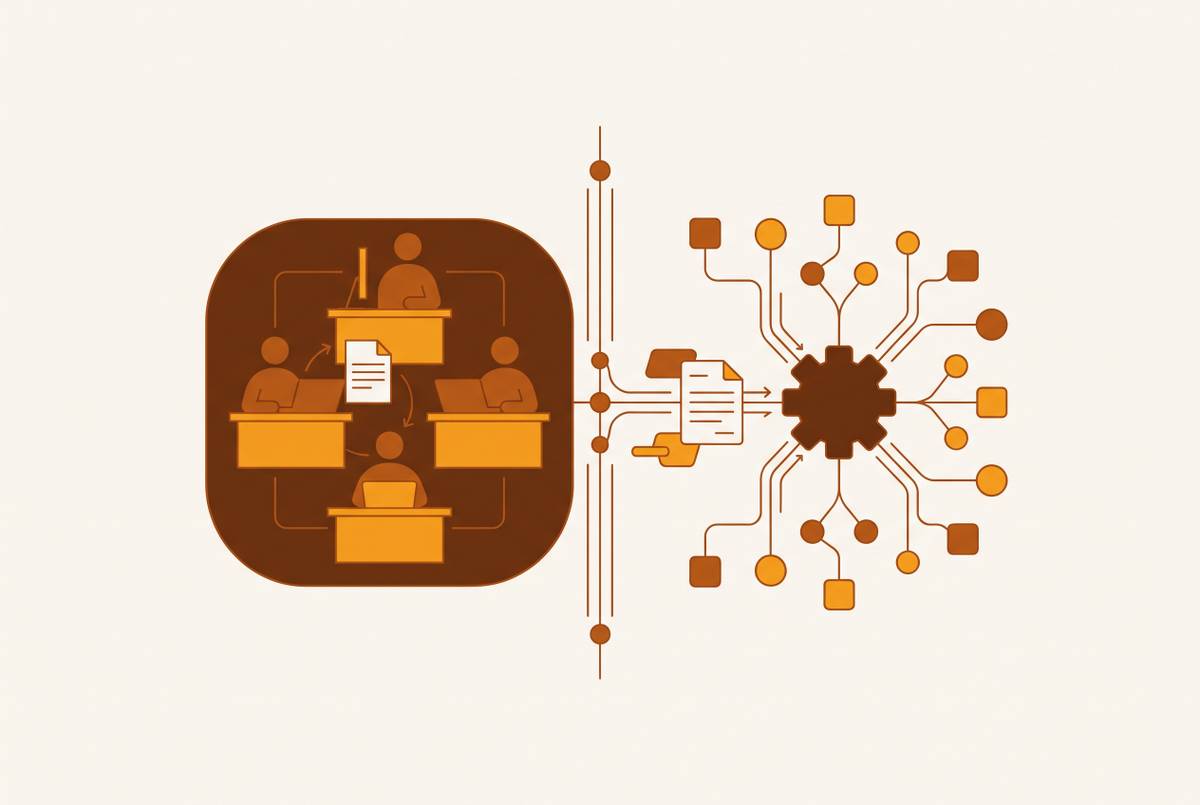
The workable architecture splits the labor accordingly. AI handles pattern matching and flagging at scale; human billers own the exceptions, the appeals, the ambiguous documentation gaps, the payer-specific escalation paths that require someone who has actually read the policy. This is also the line between genuine pre-submission intelligence and checkbox compliance: a flagged claim is only useful if someone acts on the flag before it goes out the door. Evaluate any billing tool against that standard. Is there a human step between the AI's flag and the submission decision, or does the claim ship regardless of what got flagged?
What to look for when evaluating pre-submission AI tools
Start with whether the system maintains a separate behavioral model for each payer or applies one uniform set of edits across all of them. Ask a vendor to show denial rate differences by payer, before and after implementation. Without that evidence, the model probably isn't payer-specific in any meaningful sense, no matter what the sales deck claims.
Ask how fast policy changes get reflected. Payer policy updates routinely land on practices with no advance warning. A vendor tracking payer policy publications and updating models continuously is a fundamentally different product from one issuing rule updates once a quarter, even if both call themselves AI-powered.
Check for RFI pattern coverage specifically, not just hard rejections. RFI denials are a growing category, and they pass standard edits cleanly, so a tool that only catches hard denials is missing a real and expanding piece of the problem.
Then look past the flag itself. Does the system tell the practice what to fix and leave staff to act on it, or does a biller actually work the flag before the claim goes out? Software tools tend to put that burden back on practice staff; done-for-you services absorb it. Related to that: can the practice see, in real time, which claims got flagged and why, or does the first sign of trouble arrive in a month-end denial report? Real-time, claim-level visibility separates a billing partner from a black box that occasionally produces a summary.
Last, check compatibility. A pre-submission AI layer that forces an EMR or clearinghouse migration adds implementation risk and retraining cost before it scrubs a single claim. Tools that plug into existing workflows can be judged on their own merits; tools that require infrastructure changes first are harder to evaluate honestly, because the switching cost muddies the comparison.
The distinction between static scrubbing and dynamic pattern detection is where the real leverage sits, and it is also the test for whether a tool is learning from payer behavior or running through a checklist. Services that run claims end-to-end across a large population of practices accumulate exactly the kind of institutional memory that pattern detection depends on, such as Altair Health, a fully managed AI medical billing service that processes claims across its entire client base. Every denial becomes a data point, every payer's shifting criteria gets logged as it happens, and the claim gets flagged before it leaves the practice rather than after a remittance advice explains what went wrong.