How AI Claim Scrubbing Works in Medical Billing
AI-powered scrubbing catches denials that rule-based systems miss.

A medical claim can be coded correctly and still die before it reaches a payer. Coding assigns the CPT and ICD-10 codes. Charge entry records the associated cost. Scrubbing is the separate step that audits the finished claim for errors before submission, and claim editing fixes whatever the scrubber flags. Those are four distinct jobs, not one job done four times. AI has changed what scrubbing can actually catch, and most billing offices are still running the old version of that step while assuming it does the new one. That assumption is the mistake worth correcting.
Why the denial environment makes scrubbing more consequential than it used to be
The national claim denial rate climbed to 11.8% in 2024, up from 10.2% in 2020. That's a trend line, not a blip, and it's moving the wrong way while payers get sharper about finding reasons to reject a claim in the first place.
One number should worry a billing manager more than the headline rate: the AMA estimates that nearly two-thirds of denied claims never get reworked at all. That money doesn't sit in a queue waiting for someone to get to it. It gets written off, quietly, and it never shows up on a collections report again.
Payers aren't standing still while this happens. They run their own AI systems, tuned to find rejection opportunities, and their policies shift constantly underneath a billing office still working off last quarter's rulebook. Blue Cross plans alone made more than 1,200 policy updates in 2024. No manual rule set built by hand tracks that pace. It lags by weeks, sometimes months, and the gap between what a billing team expects to clear and what actually clears keeps widening. Payers update their adjudication logic on a rolling basis. Most practice-side scrubbing tools run on rules written once and left alone. That mismatch is the whole problem, and it's the reason AI-based scrubbing stopped being optional.
What rules-based scrubbing does and where its ceiling is
Legacy scrubbers run off a static library of if-then edits, usually written by billing staff or a clearinghouse vendor and updated whenever someone remembers to update it. They catch what they were built to catch: code pairs that never work together, missing required fields, obvious formatting errors in demographic data. That's real, useful work, and it's why rules-based scrubbing became the industry default in the first place.
But a fixed rule set can't learn from a practice's own denial history. It can't tell a biller that Payer A treats a code combination one way and Payer B treats the same pairing another. It doesn't notice when a payer quietly rewrites its adjudication logic, and it won't catch a documentation mismatch that never trips a known edit. Rules-based tools cap out around a 90 to 93% first-pass acceptance rate, and that ceiling is structural, not a matter of better maintenance. Pick any rules-based tool on the market today and it hits that same wall, no matter how often someone updates the rule library. The remaining gap, the claims that look clean by the rulebook but still bounce, is exactly the territory where AI scrubbing operates and rules-based tools simply can't follow.
The layered sequence AI claim scrubbing actually runs
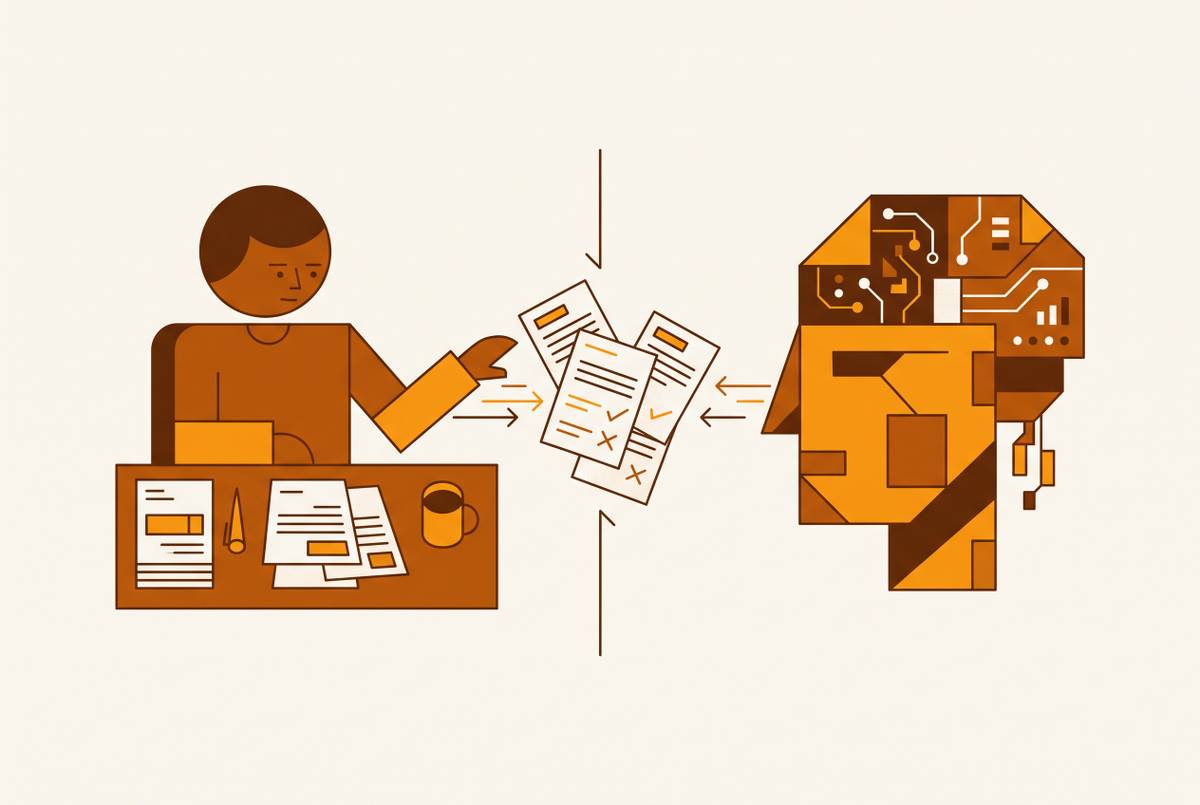
AI scrubbing learns from historical claim outcomes instead of applying a fixed edit library. It's pattern recognition built from prior denials, not a lookup table someone typed in three years ago. That process runs across several distinct layers, each catching a different class of error.
Layer 1 handles demographic and eligibility validation, in real time against payer eligibility data at the moment of submission, not days earlier when the patient checked in at the front desk. It catches name and ID mismatches, coverage lapses, and benefit-limit conflicts before the claim takes final form. Eligibility issues are a recognized source of preventable denials, so clearing them here removes a common mechanical failure type before it costs anyone a resubmission cycle.
Layer 2 checks code structure and clinical logic. Does the diagnosis code actually support the procedure billed? Is the ICD-10-CM code specific enough on laterality, severity, and encounter type to match the documentation? Is a modifier present where one's required, and does it fit the clinical scenario? The system compares the physician's documentation against the billed codes, surfacing the gap when what got documented doesn't match what got billed.
Layer 3 reviews bundling and evaluation-and-management coding. The system compares documentation complexity against the level of service billed, and flags cases where a separately billed office visit might not hold up, say, a visit billed alongside a procedure where the note never establishes a distinct, separately identifiable service. This layer does more than block a denial. It guards against compliance exposure at the same time, a dual function no static rule set was ever built to perform.
Layer 4 is payer-specific pattern recognition, and it's the layer a rule set genuinely can't replicate. The model trains on the practice's own historical denial outcomes to build payer-specific pattern recognition. It knows that one specific payer denies modifier 25 on a given code combination at a higher rate than others do, and flags that pairing before the claim goes out. The model keeps updating as new denial outcomes arrive, so it gets sharper every billing cycle instead of waiting on someone to rewrite a rule by hand.
Layer 5 checks for authorization gaps, cross-referencing the billed procedure against payer-specific prior authorization rules and flagging claims where the authorization on file doesn't match the service, or where it's missing outright.
Layer 6 runs compliance and outlier screening. The system raises an internal flag when a claim looks statistically unusual for its specialty or code mix, functioning as a pre-submission check against exactly what the OIG watches for: modifier misuse remains on the OIG Work Plan for 2026. Outliers get surfaced for a human to look at, not auto-suppressed. That distinction matters. The goal is keeping a biller informed, not letting an algorithm override clinical judgment.
Only clean claims move forward at the end of that sequence. Flagged claims route to a human reviewer with the specific issue already identified, not a vague "needs review" tag that leaves someone hunting for the problem from scratch.
Where human expertise fits inside an AI scrubbing workflow
AI handles volume and pattern detection. Judgment on the exceptions still belongs to a person, full stop, and no vendor pitch should be allowed to blur that line. Billers in an AI-assisted workflow spend their time reviewing flagged claims with the context already provided, deciding on the right resolution, and applying institutional knowledge no model fully replaces, like knowing how a specific payer's representative tends to respond on an appeal call.
There's a staffing risk AI scrubbing addresses almost as a side effect. When a billing staff member with years of payer-specific knowledge leaves a practice, that knowledge usually walks out the door with them. A system trained on the practice's denial history keeps that pattern record in the model itself, not in one employee's memory. Payer behavior also isn't uniform across plans under the same brand: a resolution that works with one Blue Cross plan may not work with another, and a human biller who knows that specific plan's habits stays essential for appeals and escalations no software handles alone.
Anyone framing this as a headcount story is telling it wrong. Fewer claims requiring manual rework, somewhere in the 60 to 80% range in practices running AI-assisted scrubbing, means billing staff time shifts toward the complex exceptions and appeals that actually need a person, instead of retyping the same demographic correction for the fourth time that week.
What the performance gap between AI scrubbing and manual review looks like in practice
AI-powered scrubbing pushes first-pass acceptance rates above 97 to 98%, against the 90 to 93% ceiling rules-based tools hit. A few percentage points sounds small until it gets multiplied by claim volume.
Take a high-volume operation running a 6% rejection rate. That's roughly 12,000 claims a month needing manual rework. At 15 minutes per claim, that's about 3,000 labor hours a month, the equivalent of 18 full-time staff whose entire job is fixing errors a better scrubbing layer would have caught before submission. That's a standing payroll line spent on rework instead of growth, and it's the plainest argument against sticking with a rules-based system past the point it's earned its keep.
Practices running AI-native billing environments report denial rates near 5%, against the 11.8% national average and the 14 to 16% range common across private payers. Days in accounts receivable in high-performing AI-assisted setups land in the 18 to 22 day range, a meaningful improvement over typical industry benchmarks. Administrative labor costs drop 30 to 40% in these setups as routine data entry and correction work gets automated out of a biller's day.
None of this is exclusive to large health systems. The rework math scales down proportionally: even at 500 claims a month, a double-digit denial rate compounds into real staff hours and real write-offs. The clock matters more than most billing teams treat it. The longer a claim ages uncollected, the harder recovery becomes, and the real value of AI scrubbing sits upstream of that clock: catching the error before submission, not chasing the claim after it ages.
How to evaluate whether a current scrubbing process is actually working
First-pass clean claim rate is the clearest single signal a practice has. Practices holding above 95% on first submission see shorter A/R cycles, lower administrative cost, and cash flow that's predictable month to month. Practices below that number are working harder to collect less, full stop, and no amount of staffing fully makes up for it.
A few numbers are worth tracking directly, not as a dashboard exercise but as a diagnosis. Denial rate broken out by payer, not just practice-wide, since a blended average hides which payer is actually driving the problem. Days in A/R measured against industry benchmarks, with close attention to how much of total receivables has aged beyond 90 days. And the split between denial reasons: front-end failures like demographic or eligibility errors versus medical necessity or authorization denials, because those need entirely different fixes.
A few warning signs are worth naming plainly, too. The same denial reason recurring from the same payer, month after month, means the scrubbing process isn't learning anything. A denial spike lining up with a payer policy change the billing team only heard about after claims started bouncing means the scrubbing logic is reactive, not predictive. And a clean claim rate that stays flat even as volume grows is maybe the clearest sign that whatever's in place is rules-based dressed up as something smarter.
Worth asking any billing partner or scrubbing vendor directly: does the system learn from this practice's own denial history, or is it running a generic rule set with a new label on it? How fast does payer-specific logic update once a payer changes its criteria? What happens to a flagged claim, specifically: who resolves it, and how does it get routed? Does the system plug into the practice's existing EMR and clearinghouse, or does adopting it mean tearing out a workflow that already runs fine?
A billing partner worth using pairs AI pattern recognition with in-house billing specialists who handle the exceptions the model surfaces, and it integrates into existing EMR and clearinghouse infrastructure instead of demanding a full rebuild. A software-only product, or a bolt-on clearinghouse feature, usually answers one of those questions well and dodges the rest.
The six layers above aren't just a technical explanation. They're the checklist. A scrubbing process that skips any of them (demographic and eligibility validation, code and clinical logic, bundling and E/M review, payer-specific pattern recognition, authorization gap detection, compliance screening) is leaving some class of preventable denial sitting on the table. Whether anyone's noticed yet is a separate question.