Robotic Process Automation in Medical Billing Workflows
Automation handles billing's high-volume tasks, but human expertise must govern its limits.

Robotic process automation earns its place in medical billing not as a single solution but as a layer of targeted automation across distinct workflow stages, each with its own logic and failure modes. Payers are already running AI-driven review systems against providers at machine speed, and manual workflows cannot respond at the same scale. Understanding what RPA does at each step, and where human expertise must stand behind it, is the practical knowledge an independent practice needs before deploying it.
Why manual billing workflows cannot keep pace with automated payer systems
Payers are deploying AI-driven review systems that evaluate and adjudicate claims in seconds, while most independent practices still rely on staff performing the same steps manually. A denial arrives, and a staff member must log into a payer portal, read the reason code, locate the claim, gather documentation, and route it. Those steps take hours, and a bot could execute them in seconds.
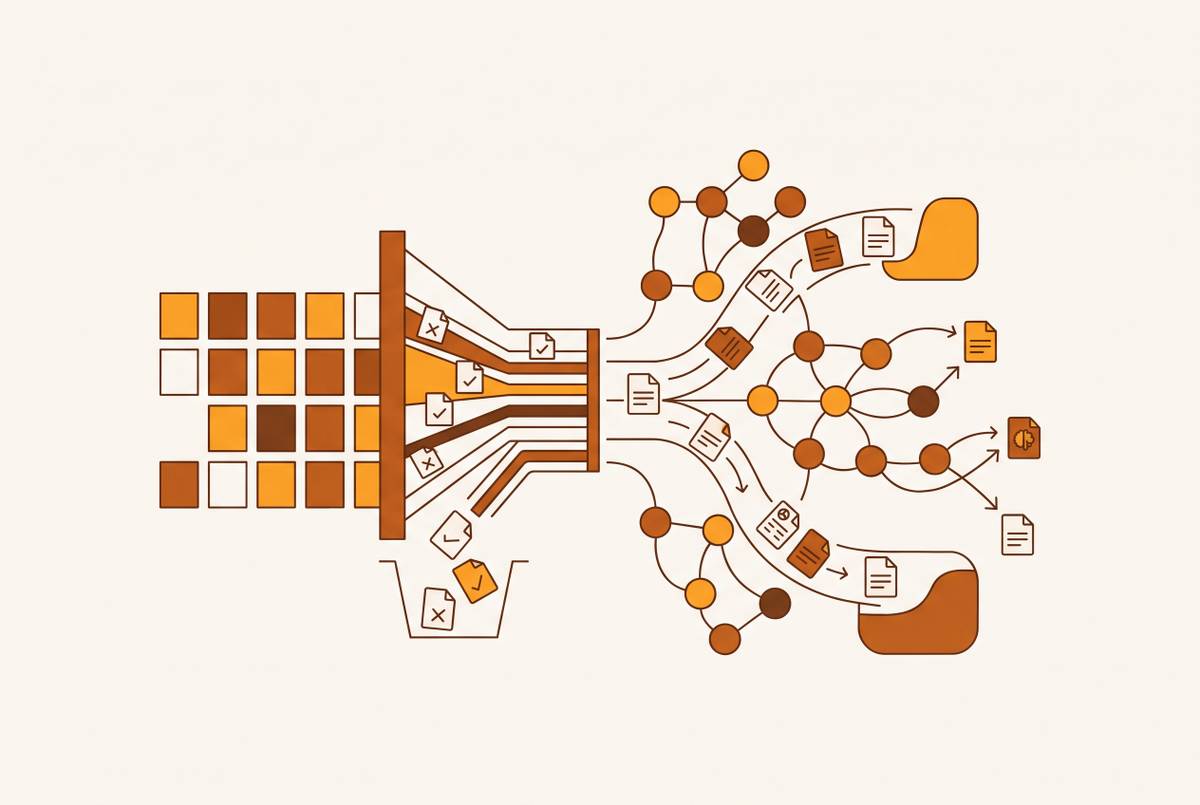
RPA bots replicate the steps a trained billing specialist takes: logging in, navigating screens, entering data, moving between applications. The difference is machine speed and the absence of fatigue-induced error. If the same sequence runs hundreds of times a day, small delays add up to days of lost staff capacity.
Staff shortages deepen the problem. Experienced billers are hard to retain, and the institutional knowledge of how each payer behaves leaves with them. That memory gap is precisely what payers exploit, and it makes the speed mismatch harder to close through hiring alone. The scale of the administrative burden is not small. A single billing interaction costs roughly $20 for a primary care visit and over $200 for an inpatient surgical procedure, a material share of professional revenue depending on encounter type.
What RPA actually is in a billing context, and how it differs from broader AI
RPA in medical billing is software that replicates rule-based, high-volume human interactions with existing systems through their own user interfaces. It does not use API integrations or require system redesign, which means it layers on top of the EHR, practice management system, and clearinghouse a practice already uses. That is why deployment does not require a rip-and-replace technology project.
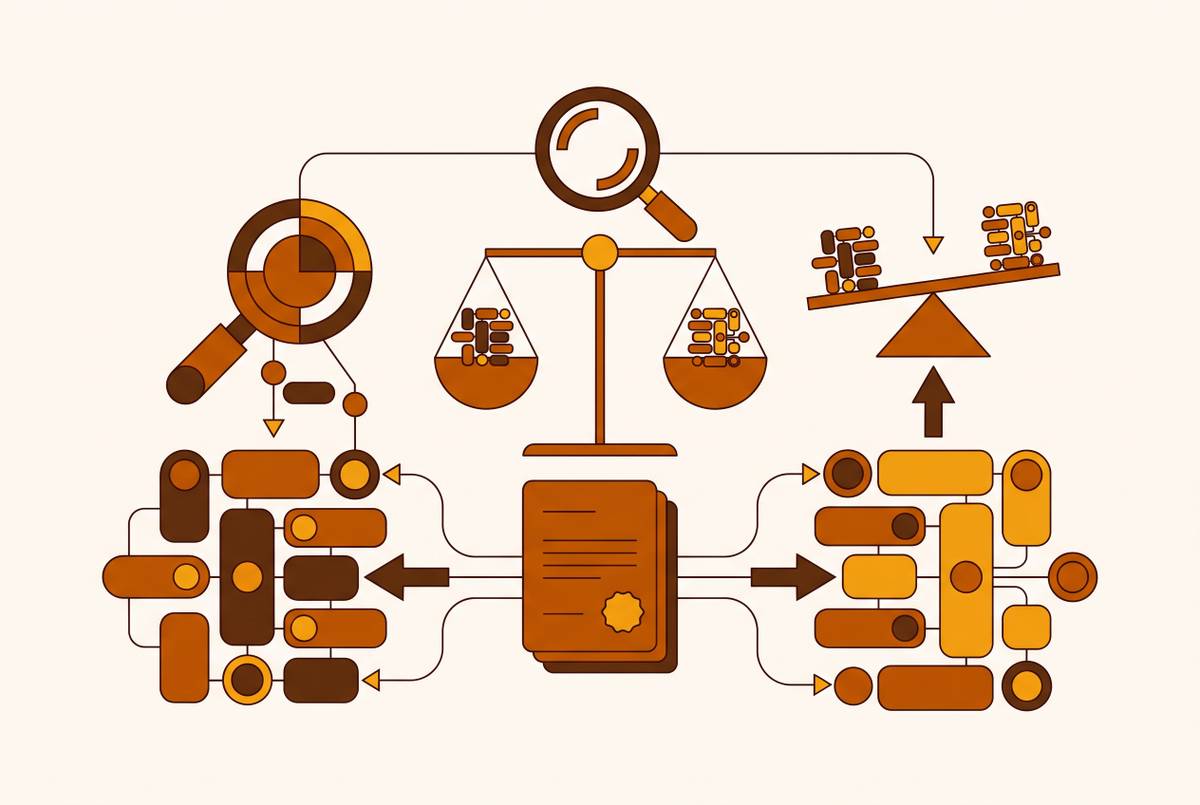
The essential distinction from broader AI is what the software does with ambiguity. It does not reason through ambiguity or make judgment calls. That distinction determines exactly where RPA works and where human expertise must take over. A billing workflow splits naturally into steps a bot can execute reliably and steps that require human reasoning about payer behavior.
Two operating modes matter for workflow design. Attended bots trigger on a user action and help staff in real time when judgment is still needed, like guided claim correction or an eligibility lookup during a patient call. Unattended bots run on a schedule or trigger without an operator, so they handle batch eligibility checks overnight, scheduled claim status checks, and automated denial identification. Mature RCM automation programs deploy both: unattended bots handle volume, attended bots handle complexity.
The most revealing finding for a practice considering RPA is that between 30 and 50 percent of initiatives underperform expectations, and the dominant root cause is not the tooling. It is process selection. Organizations automate processes chosen by anecdote rather than by a repeatable, objective method. It is the difference between an automation program that returns value and one that becomes a maintenance burden.
Eligibility verification: where RPA produces its clearest, fastest return
Eligibility verification is the highest-volume, most rules-bound task in the front end of the revenue cycle, and it is the single largest source of preventable denials. The manual version requires a staff member to log into each payer portal separately, query coverage for every patient on the schedule, record the result, and flag discrepancies. This repeats for every appointment, every day, often the evening before or the morning of the visit.
An unattended bot handles the same work as an overnight batch job. It runs the full schedule against payer portals, records active coverage, flags inactive or changed coverage, and surfaces exceptions for staff to review before the first patient arrives. Vigilant Medical Group's 2026 billing technologies review lists eligibility verification among the core RPA use cases, and says bots handle the repetitive, rule-based work that consumes staff capacity. The failure mode is specific and important. Practices that treat deployment as set-it-and-forget-it are the ones that experience the steepest eligibility-related denial spikes after a portal update.
Prior authorization: where automation hits the limits of rule-based logic
Prior authorization is where RPA provides the most relief from pure administrative volume, but also where its failure mode is most consequential. The manual burden is severe. Vigilant Medical's 2026 review reports that practices lose roughly 16 hours per week to prior authorization tasks.
What an RPA bot can do is substantial and well-bounded. It can log into payer portals, retrieve authorization status, pull documentation checklists, submit standard authorization requests for predictable service types, and track pending requests, all without staff time. What it cannot do is respond to a payer's proprietary clinical criteria, whether InterQual, MCG, or internal guidelines. It can't judge whether documentation meets medical necessity standards, and it can't adapt when a payer changes its criteria midstream but doesn't publish the change.
The specific failure mode deserves attention because it scales. This is not a reason to avoid automation. It is a requirement to structure the deployment so that documentation review happens before submission, not after denial.
The human role is larger here than in eligibility. A specialist who knows how each payer's criteria actually behave, not just what the policy document says, must review and supplement bot-submitted documentation before it goes out, especially for high-cost services. That distinction, between what a bot can execute reliably and where human reasoning is essential, is exactly why the most mature billing automation programs combine unattended bots for volume with in-house specialists who work the exceptions the automation identifies.
Claim scrubbing: what automation catches before submission and what it misses
Claim scrubbing is where RPA and AI-assisted tools have produced the most clearly documented improvement in clean claim rates. The rules governing claim validity, required fields, format standards, payer-specific edits, are large in number but consistent in structure, which makes them ideal material for a rules engine. They flag or auto-correct errors before the claim reaches the clearinghouse.
The measurable result is substantial. Vigilant Medical's 2026 review states that AI-powered claim scrubbing makes first-pass claim rates above 90 percent achievable, against an industry average that falls well below that threshold. A claim that passes scrubbing on the first submission does not consume denial management resources, so every point of improvement in clean claim rate reduces downstream workload.
What scrubbing misses is not a technology limitation in the ordinary sense. Rule-based scrubbers check against known edits. Payer policy changes are the scrubber's blind spot. When a payer quietly changes what it requires for a specific service type, claims that would have passed scrubbing yesterday begin failing today, and the scrubber continues passing them until someone notices the denial pattern and updates the ruleset. That is why institutional memory applies directly here. The gap between a generic ruleset and an observed-behavior ruleset is the gap between an automation rate that looks good on a dashboard and one that actually recovers revenue.
Denial management: the stage where automation alone is least sufficient
Denial management is where revenue is actually recovered or permanently lost, and it is the stage where rule-based automation is least sufficient on its own. The scale of the problem tells the story. MD Revenue Group's denial management analysis reports that 77 percent of denials stem from administrative causes, eligibility, demographics, missing authorizations, all of which are preventable upstream. Yet a majority of denied claims are never reworked at all, resulting in permanent revenue loss.
What automation can do in denial management is real but bounded. It can identify denial reason codes, sort denials by type and payer, route correctable claims back into the submission queue, generate templated appeal letters for standard denial types, and track appeal deadlines. MedStat's August 2026 analysis describes agentic AI systems that can identify denial patterns, draft appeals, and route only the genuinely complex cases to human specialists, compressing the time between denial receipt and appeal submission. Missing a window closes the recovery opportunity permanently.
What automation cannot do is the part that costs the most money. A bot cannot read why a payer used a vague denial reason code. It cannot make the judgment call about whether to appeal, adjust and resubmit, or write off a claim. That produces low appeal success rates and leaves recoverable revenue on the table. The human role here is not triage support but the center of the operation. That knowledge lives in experienced billers, not in a ruleset, and it is precisely what staff turnover destroys.
Payment posting: high-volume, high-accuracy, and the reconciliation problem bots still surface
Payment posting benefits most cleanly from unattended automation. MedStat's 2026 analysis describes autonomous agents that match remittances to claims and flag discrepancies automatically, so cash accelerates in days rather than the months typical of manual posting backlogs. The underappreciated benefit is what the reconciliation report reveals. The 2025 CAQH Index finding puts the broader opportunity in context: the healthcare industry could save an additional $21 billion annually by fully automating administrative transactions still handled manually or semi-electronically, and payment posting is among those transactions.
The failure mode is format drift. ERA files vary across payers, and a bot configured for one payer's remittance format may misread another's, posting incorrect adjustments that require manual correction and create AR inaccuracies that compound over billing cycles. These are judgment calls that the bot's reconciliation output makes possible but cannot make on its own.
Where every RPA deployment eventually requires human expertise behind it
Across every billing workflow stage, the pattern is the same. Gomez and Castillo's framework identifies process selection, not tooling, as the dominant root cause of RPA underperformance. Organizations automate without first understanding which parts of the process are genuinely rule-bound and which require judgment.
The practical implication is that automation suitability is not a yes or no question for a billing workflow. It is a question about which steps within a workflow are bot territory and which steps require payer-specific institutional knowledge or clinical judgment. That operation produces better outcomes from the same automation tools than one running generic configurations.
Staff turnover destroys this advantage. MedStat's 2026 analysis describes the leading model as pairing agentic AI with a disciplined data strategy and a human-in-the-loop approach for exception handling. The organizations pulling ahead are not the ones deploying the most agents. They are the ones building the right human-automation structure around them.
This framing resolves the tension the workflow analysis has built. Human expertise is not the fallback when automation fails. Services like Altair Health, which layers AI-driven automation with in-house billing specialists, preserve that payer-specific intelligence across staff transitions and close both the speed and memory gaps at once.
What independent practices need to evaluate before deploying RPA in their billing operation
Before you pick RPA tools, you need to answer three questions. Which billing steps are rule-bound and high-volume enough to automate? The second determines configuration. The third determines whether the deployment will remain operational or decay after the initial setup.
Workflow standardization is a prerequisite, not a byproduct. Gomez and Castillo's framework and PYMNTS' August 2025 analysis both point to inconsistent or poorly documented internal workflows as the first obstacle practices hit. A practice that cannot describe its billing steps precisely cannot expect a bot to execute them reliably.
The integration question has a clear answer. RPA operates through existing interfaces, so the practice does not need to replace its EHR or practice management system. That configuration and maintenance work is the hidden ongoing cost of a self-managed RPA program.
The build-versus-partner decision follows from the capacity question. Practices with dedicated billing staff and IT capacity can build and maintain their own RPA program. Altair Health operates that model for independent and small-to-mid-size practices, running AI-driven automation across eligibility verification, claim scrubbing, denial routing, and payment posting, with in-house billing specialists working the exceptions the automation surfaces, and integrating with existing EMRs and clearinghouses so practices keep their current workflows. The key question for any vendor or partner evaluation is whether the automation runs on generic rulesets or encodes payer-specific behavior learned from actual claims experience. Gomez and Castillo flag this as a distinct compliance layer that varies in intensity by automation tool and must be addressed before deployment.