Automated Claim Scrubbing Rules vs AI-Driven Scrubbing
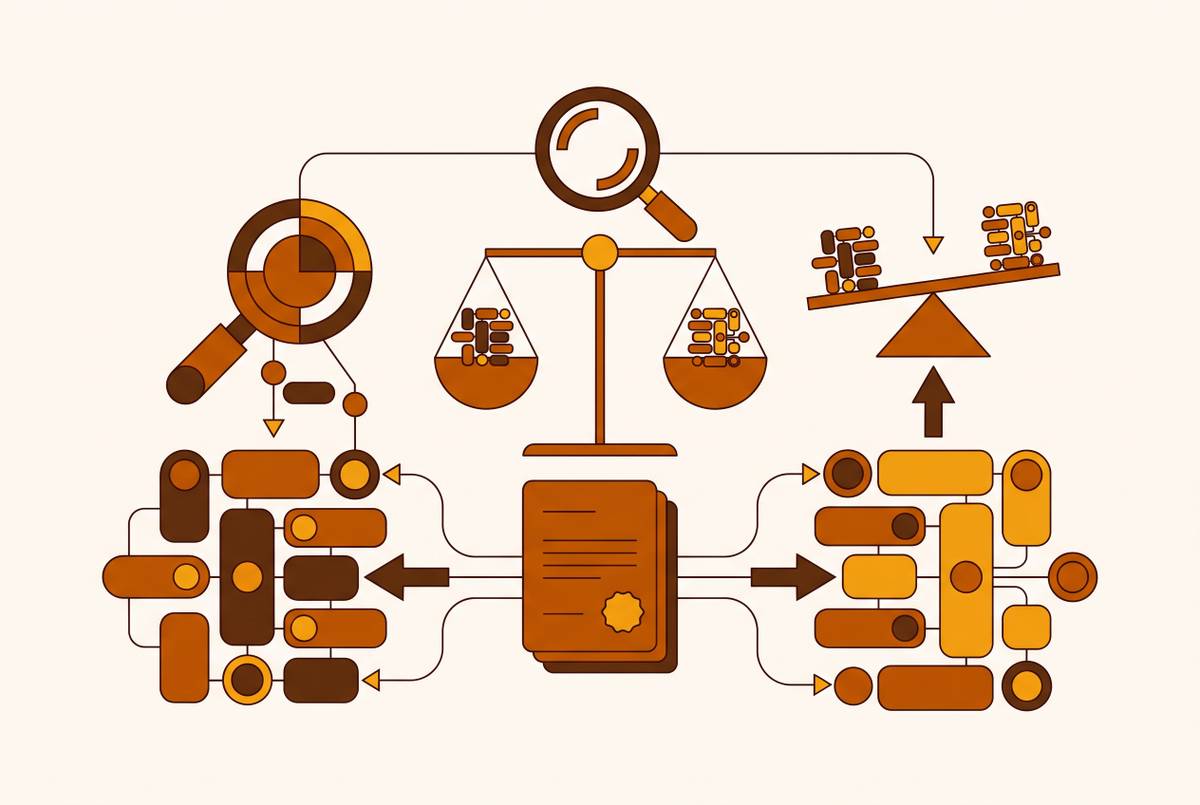
Rule-based scrubbing catches structural errors, but AI learns what actually causes denials.
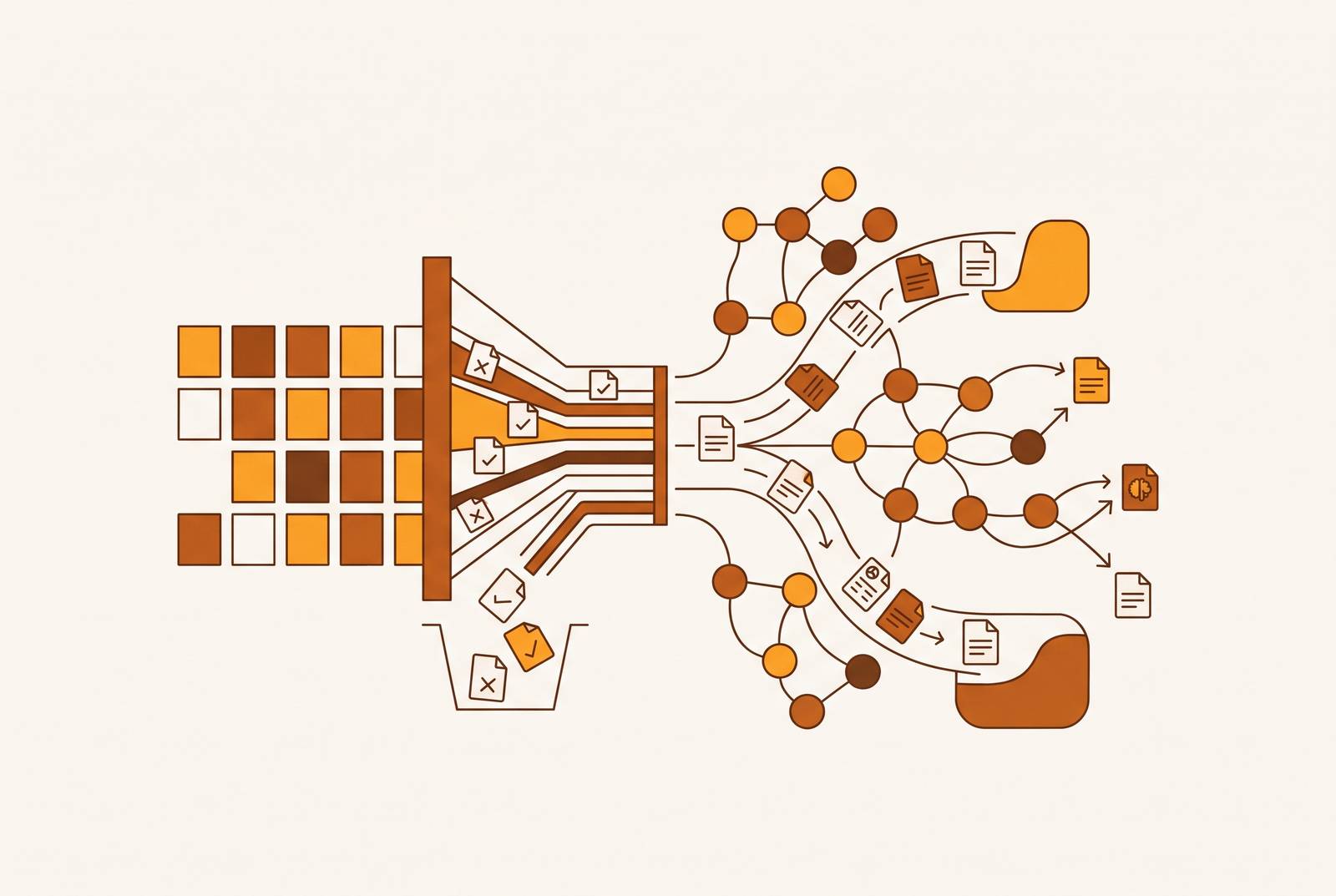
Claim scrubbing is the review every claim goes through before it reaches a payer, checking for the errors, omissions, and compliance failures that would otherwise cause a rejection or a denial. The goal is a clean claim the first time it's submitted, not a faster way to fix the claim after the payer kicks it back. A claim that passes scrubbing should carry accurate patient demographics and provider information, including the correct NPI, the right modifiers attached to the right codes, documentation that actually supports medical necessity, and compliance with whatever national and payer-specific guidelines apply to that code set.
Billers used to do this by hand, reading each claim line by line against what they knew of a given payer's requirements. That approach was slow, and it broke down at volume: a solo biller's knowledge of one payer's quirks didn't transfer to the next claim for a different payer, and the whole system depended on how much any one person happened to remember on a given day. Automated scrubbing software took over much of that manual review, running every claim through validation logic before it ever reaches a payer. What matters now is what kind of logic a practice's automation runs on, and where that logic stops being able to help.
"Automated" covers two approaches that work in fundamentally different ways and catch fundamentally different problems. One runs claims against a fixed set of rules. The other learns from the claims and documentation it has already seen. Knowing the difference lets a practice figure out which denials it should expect to keep seeing no matter how good its current scrubber is.
How rule-based scrubbing works
Rule-based scrubbing runs on fixed, predefined scripts. Each claim gets checked against a library of explicit validation rules, and if it violates one of those rules, it gets flagged for correction before it goes out. Every enterprise-level scrubber on the market applies a few core rule sets as a baseline.
NCCI edits are among the most important. Procedure-to-Procedure edits stop improper payment for code combinations that shouldn't be billed together under Medicare Part B, but a provider can still bill some of those combinations if the right NCCI-associated modifier gets attached. Medically Unlikely Edits catch procedure codes billed at quantities no clinical scenario would support, and CMS updates both sets of edits quarterly. LCD and NCD validation checks a different kind of requirement: Local Coverage Determinations and National Coverage Determinations spell out the clinical criteria Medicare requires before it will pay for a given procedure, and a procedure code billed without a diagnosis code that qualifies under those criteria produces a medical necessity denial even when the care itself was entirely appropriate. On top of that sit patient and provider demographic checks (catching mismatched member IDs, wrong NPIs, lapsed provider enrollment), payer-specific formatting rules governing field completeness and modifier requirements, and duplicate claim detection.
What ties all of this together is that rule-based automation works by matching a claim's fields against a known table of valid and invalid combinations. It performs well precisely because the data it's checking is structured: a code, a modifier, a quantity, an ID number, each one either matches an acceptable pattern or it doesn't. But every rule in that library was written by a person and has to be maintained by a person. When CMS updates NCCI edits every quarter, or a commercial payer quietly revises a local coverage policy, someone has to update the rule library to match. The lag between a policy change and a rule update is a real window, and during it, the scrubber can flag a compliant claim as an error and wave a noncompliant one straight through.
Where rule-based scrubbing stops
Rule-based scrubbing earns its keep eliminating structural and transmissibility errors: the missing field, the invalid code, the mismatched ID. What it cannot touch is the layer of denials that come from payer behavior, documentation quality, or diagnosis-to-procedure context, none of which a static rule table was built to encode.
Three categories of denial pass through a rule-based scrubber without triggering a single flag. The first is the medical necessity denial: a claim can have valid codes, the right modifiers, and complete demographics, and still get denied because the clinical documentation lacks the specific keywords or structured data elements a payer's review criteria demand. The scrubber reads a structurally clean claim. The payer reads insufficient justification. Second are payer-behavioral denials, where an individual payer develops a pattern of rejecting certain code combinations, certain specialty-procedure pairs, or certain modifier uses that are technically valid but consistently flagged by that payer's own adjudication logic anyway. No rule library captures these patterns, because payers don't publish them. They appear only in a practice's own claims history, after the fact. Third are high-complexity specialty mismatches, where the denial only makes sense in light of a specific specialty's norms, a specific payer contract, or a recurring diagnosis-to-procedure pattern that a generic scrubber has no way to see. A generic scrubber catches the missing field, not the contextual mismatch in a claim that otherwise looks complete.
The maintenance burden makes all of this worse over time. Commercial payers update coverage policies, local and therapy coverage determinations, and prior authorization requirements on an ongoing basis, and no manual team can track every one of those updates at scale. A rule library that falls even one update cycle behind opens up a denial category the scrubber has no way to see, because it's still checking against the old version of the rule. None of this is a flaw in the tool. It's the direct consequence of how rule-based scrubbing is built: it can only catch what someone has already written down as a rule. So rule-based scrubbing raises first-pass rates for structural errors, but it leaves behind denials that pile up as payer behavior itself grows more complex and more automated.
AI-driven scrubbing at the claim and documentation level
AI-driven scrubbing uses machine learning and natural language processing to assess denial risk from patterns across thousands of prior claims and from the clinical documentation itself, not from a fixed table of rules. Where a rule-based system asks whether a field matches an approved value, an AI system asks whether this claim, in this documentation context, for this payer, looks like the ones that got denied before.
The mechanical difference appears at every stage of the process. AI systems identify patterns across large volumes of prior claims, process documentation that was never structured for billing in the first place, interpret clinical language including negated findings, and prioritize which accounts need review based on denial likelihood rather than working a fixed queue in submission order. Natural language processing reads physician notes, operative reports, and discharge summaries directly, extracting the billing-relevant data buried inside prose that a rule-based scrubber, which only ever sees the fields on the claim form, cannot access. The system then scores each claim for denial risk before it goes out, so billers can put their attention on the highest-risk claims first.
That scoring catches two things rules structurally cannot. Documentation-to-code mismatches occur when a clinical note lacks the specificity or terminology a payer's review algorithm is looking for, and the AI flags the gap before submission, before a denial has already landed. Payer-behavioral patterns surface by training the system on a practice's or billing service's own historical claims and denial data broken out by payer, so the AI learns which code combinations, which modifiers, and which documentation patterns correlate with denials from that specific payer, then flags those same patterns on new claims before they go out. The rule library in a rule-based system only grows when a person writes a new rule. An AI system's model of denial risk expands automatically as it processes more claims, catching patterns no one has sat down and documented yet. Rules work at the level of the claim form's fields, while AI works upstream, at the level of the documentation and the pattern behind the claim.
Where AI-driven scrubbing falls short on its own
AI-driven scrubbing adds capability a rule-based system doesn't have, but it doesn't replace the structured validation layer, and it comes with its own failure modes that need human oversight to manage.
Clinical documentation carries ambiguity, and someone still has to resolve it. Coding guidelines change every year, and when an AI system's suggestion is wrong and nobody catches it, that error carries the same downstream risk as any mistake a human biller would have made. AI also learns from historical data. A genuinely new denial pattern, a payer that just changed its adjudication logic, or a new CMS policy that hasn't yet generated enough denied claims to train on won't get caught until enough examples accumulate for the model to learn from. In the window before that happens, those denials pass straight through. And AI doesn't replace structured compliance checks. NCCI edits, MUEs, and LCD/NCD validation are rule-bound by design: they need a maintained rule library, not a pattern model, and an AI system that skips that layer will let through structurally invalid claims that a basic rule-based scrubber would have stopped on the first pass.
A governance problem produces all three limits. AI suggestions that go into a workflow without human review of the exceptions create a different kind of risk than ordinary manual error, because a systematic mistake in an AI model can propagate across thousands of claims before anyone notices the pattern. The limits of the two approaches land in different places. Rules miss what they were never written to catch. AI misses patterns it hasn't seen enough of yet, and skips compliance checks it was never built to enforce. Put together, the gaps in one system are largely covered by what the other does well.
The payer AI environment that makes this distinction operationally urgent now
Pre-submission scrubbing matters more now because payers have built their own AI auditing tools, and those tools can deny claims at a speed and scale no human review process on the provider side can match. A provider's scrubbing has to operate at a comparable level of sophistication, or it's simply outmatched before the claim even reaches a person on the payer's side.
Major insurers now run proprietary AI auditing engines that flag and deny claims algorithmically, and the decision to deny arrives faster than any clinical reviewer could actually read the chart. Medicare Advantage plans apply clinical criteria sets, InterQual, MCG, and various proprietary algorithms, that don't always line up with how treating physicians actually document care. A note can fully support medical necessity and still get denied because it doesn't contain the specific keyword the review algorithm was programmed to search for. That's a documentation format mismatch rather than a clinical failure, but the denial that results is just as real and just as costly. High rates of prior-authorization denials getting overturned on appeal, a pattern documented across Medicare Advantage, Medicaid managed care, and ACA Marketplace plans, point to a substantial share of these algorithmic denials being clinically inappropriate to begin with. The trouble is that they're generated faster than most practices can appeal them.
Running on rule-based scrubbing alone in this environment has a clear financial cost. The residual denial layer keeps growing as payer-side AI gets more aggressive, because a rule-based scrubber can't see it, and revenue lost to denials that never get reworked doesn't come back. Services that manage the full revenue cycle track this gap directly: they watch which claims clear scrubbing but still come back denied, then use those patterns to find exactly where a practice's current scrubbing logic has a blind spot. Altair Health is one example of a service built around that kind of tracking, treating the gap between what scrubbing catches and what actually gets denied as a line item to close.
Evidence on adding AI scrubbing to the pre-submission workflow
Adding AI-driven pre-submission scoring on top of a rules-based baseline produces measurable gains in first-pass acceptance and lower denial volume, though how much a given practice gets out of it depends on governance and implementation quality.
OhioHealth's experience with AI-powered front-end eligibility verification, using Experian Health's Patient Access Curator, shows a substantial reduction in registration and eligibility denials from deploying this kind of tool well. That result shows what you can achieve under careful implementation, but it isn't a number every practice should expect to replicate automatically.
A harder pattern sits next to that success story. A majority of provider organizations already report using some form of AI or automation in the revenue cycle, yet only a small share of them report a positive return on that investment. The gap isn't a failure of AI itself. It traces back to where the AI spending actually goes: a disproportionate share flows toward ambient documentation tools and coding assistance, not toward denial prevention or pre-submission scrubbing. AI gets results specifically where you aim it at denial risk scoring and payer-behavioral pattern detection before a claim goes out. If a practice deploys AI elsewhere in the revenue cycle and leaves scrubbing running on rules alone, the AI spend has little reason to lower denial rates.
Mapping scrubbing gaps to actual denial sources in a practice's billing data
A practice trying to figure out whether its scrubbing is actually working should start by sorting its own denials into the categories this comparison has already laid out, rather than asking in the abstract whether its software is "good enough." Denials tied to missing fields, invalid codes, or mismatched IDs point to a rule library that needs updating or a rule-based scrubber that isn't being maintained on the same cycle as CMS's quarterly NCCI and MUE changes. Denials tied to medical necessity, where the codes and modifiers were correct but the documentation didn't contain what the payer's review criteria required, point to a gap no rule-based system was ever going to close, and signal a need for a smarter review layer that can read documentation before submission. If denials cluster around one specific payer, one specific code combination, or one specific specialty-procedure pairing, analyzing a practice's own claims history reveals payer-behavioral patterns, the exact kind of pattern AI scrubbing is built to learn.
The practices asking who can run their billing end to end, without needing to build a billing department of their own, are really asking which combination of these layers actually prevents denials rather than just processing them faster after the fact. The answer isn't a single tool. Rule-based checks hold the line on structural validity and regulatory compliance. AI pattern recognition catches the payer-specific behavior and documentation gaps that rules were never built to see. Human billers work the exceptions that neither one resolves on its own, the ambiguous note, the judgment call, the appeal that needs a person who knows the payer's history with this practice. Altair Health combines AI-driven pattern recognition with in-house billers along these lines, treating the AI layer as the way to learn each payer's policies and behavior and turn that into prevention, with billers handling the exceptions the system flags. Whichever vendor or model a practice chooses, the task is the same: pull the denial data, sort it against these categories, and let the pattern in the data, not the marketing behind any one tool, determine which layer is actually missing.