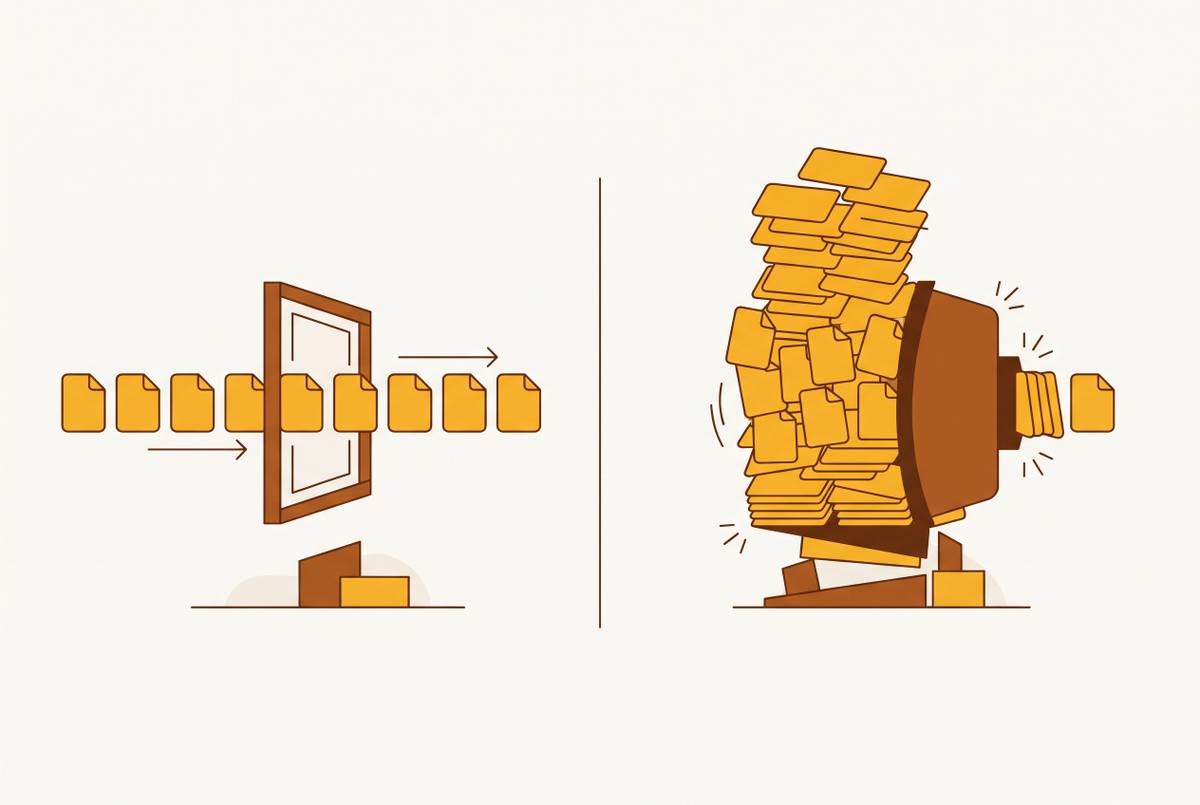
Soft Denial vs Hard Denial Handling in Medical Billing
Misclassifying denials as soft instead of hard costs practices more revenue than payer disputes do.

Soft denials and hard denials require fundamentally different handling. One is a paperwork fix with a short clock; the other is a formal dispute that demands evidence, citation, and calendar discipline. Practices that route both through the same queued-review workflow make a specific, costly mistake: appeal-level effort gets spent on claims that just needed a corrected field, while substantive denials get resubmitted without ever building the argument that would have overturned them. Getting this distinction right, at the moment the denial lands, is the difference between recoverable revenue and a write-off. The fix requires classifying correctly before either track starts, and most practices get the classification backwards.
Start with the vocabulary, because billing teams blur it constantly, and the blurring is where the money leaks. A rejection happens before a claim ever reaches a payer's adjudication system, usually a formatting error or a data-entry mistake a clearinghouse catches. A denial happens after the payer has reviewed the claim. Within denials, a soft denial means the payer flagged something correctable: a missing field, a coding slip, an eligibility mismatch. Payment is still reachable if the practice acts fast. A hard denial means the payer made a substantive decision to refuse payment, on grounds of coverage, medical necessity, or a missed filing deadline. The only path forward, if one exists, is a formal appeal.
Treat a soft denial like a hard one and the claim ages past its resubmission window while someone builds a case file it never needed. Treat a hard denial like a soft one, correcting a field and resubmitting without an actual argument, and the claim comes back denied again, because nothing about the payer's underlying objection got addressed. Two tracks, two clocks, two skill sets. Everything below builds from that split.
What actually triggers each denial type — and why the trigger determines the response
Soft denials come from the mechanics of claim construction, not from anyone's judgment. Missing or incomplete patient demographics. An authorization number that never made it onto the claim. A diagnosis or procedure code that's wrong, or blank in a field the payer's system checks. Eligibility mismatches, where coverage lapsed, the wrong plan is on file, or the effective date doesn't line up with the date of service. Duplicate claim flags, where a resubmission gets misread as a second, unrelated claim. None of this involves the payer deciding whether the service was appropriate or covered; it's clerical, and it should be handled that way, fast and without ceremony.
Hard denials come from judgment calls, and that distinction is the whole ballgame. Non-covered services and benefit exclusions sit here. So does medical necessity, where the payer decides the documentation doesn't support the clinical need for what was billed. Coordination of benefits failures land here too, when multiple plans are in play and the primary payer was never established before billing. Late submission, filing outside the payer's timely filing window, is a hard denial with no soft-denial equivalent: it becomes a permanent write-off, not a correctable error. A missing precertification or prior authorization, when one was required, gets treated by most payers as a substantive failure rather than a paperwork gap.
The diagnostic question a biller has to answer before doing anything else is simple to state and easy to get wrong under time pressure: is the payer's stated reason procedural, or substantive? A procedural reason sends the claim down the correction-and-resubmit track. A substantive reason sends it into the appeal track. Misreading that question at intake is the single most common way practices misroute recoverable revenue, more common than billing managers tend to admit out loud.
The split between the two categories is shifting against practices, and the shift undercuts anyone hoping automation alone solves this. Clinical denials, meaning medical necessity denials and requests for additional information, rose 5% and 5.4% respectively in 2024, while authorization-related denials fell 7.7%. Fewer denials are the kind a corrected field can fix; more of them require a documented, cited argument to reverse. The easy category is shrinking while the hard category grows, which means practices still staffing for soft-denial volume are staffing for the wrong problem.
The financial cost of getting the response wrong — or not responding at all
Here is the number that should reorder every practice's priorities: 65% of denied claims are never reworked or resubmitted at all. Not appealed and lost. Not corrected and rejected again. Abandoned. The majority of denial-related revenue loss in medical billing traces back to claims nobody ever touched again, which points the fix at triage, not at payer relations.
Rework isn't free either, and this is where abandonment turns from careless into indefensible. Appealing a hard denial costs an average of $118 in administrative time per claim. Sitting right next to that figure: 54.3% of denied claims that do get appealed are ultimately overturned. More than half. Which means most of the claims practices give up on, the 65% that never get reworked, are statistically more likely than not to have been winnable. The damage here reflects a triage failure more than a payer-aggression story: practices that can't tell quickly which denials are recoverable default to doing nothing, and nothing is the most expensive option on the table, full stop.
The soft denial workflow: correct, document, and resubmit before the window closes
The first move, the moment a soft denial lands, is classification. Read the Explanation of Benefits or the remittance advice remark codes closely enough to know whether the payer's reason is informational and procedural, or whether it's actually a coverage decision dressed up in soft-denial language. This step takes minutes and determines everything downstream.
Once classified as soft, the fix is usually narrow. Missing demographic or authorization data gets pulled from the patient record and added back to the claim. An eligibility mismatch gets resolved by verifying current coverage and confirming plan and effective dates before anything gets resubmitted, not after. A coding error gets caught by checking the original encounter documentation against what was actually submitted, correcting it, and noting the fix for the record.
Resubmission has a technical detail that trips up more claims than it should: this needs to go back as a corrected claim, not a new one. Most payer systems use a claim frequency code, typically code 7, to signal a replacement claim. Skip that indicator, resubmit as if it were fresh, and the claim risks getting flagged as a duplicate or tripping a timely filing rule that a proper correction would have avoided entirely.
Speed matters more here than anywhere else in the process. Resubmission windows for soft denials are frequently shorter than the formal appeal windows attached to hard denials, and the two clocks run independently of each other. Soft denials belong in a same-week workflow, worked within days of receipt, not queued for a monthly batch review that lets the window quietly close.
Most of this is preventable before a claim ever gets submitted, and the industry has been slow to act on that fact. A significant share of denials trace back to front-end errors, and eligibility issues consistently rank among the most common preventable denial causes. Automated eligibility checks run before a visit catch many of these before the claim exists to be denied. Many soft denials trace back to a front-desk issue that surfaces two weeks later on a remittance advice, and blaming the coders for it misdiagnoses the fix entirely.
The hard denial workflow: building a formal appeal that can actually win
A hard denial appeal is a formal argument made to a payer reviewer, requiring clinical and administrative evidence assembled before the letter gets drafted, not scrambled together after the fact.
Before committing to that track, confirm the denial is actually hard. Some payers issue denials using medical necessity language on claims that, on inspection, have a correctable front-end error sitting underneath the substantive-sounding reason code. Confirming the real cause before building an appeal packet saves the cost of an appeal that never needed to exist.
Every payer publishes its own appeal requirements, and pulling them before building anything is non-negotiable, because windows vary widely. Medicare Part B and Medicare Advantage each set their own appeal windows from the denial date for a Level 1 redetermination. Miss the window and the claim is forfeited permanently, appeal quality irrelevant at that point. Calendar the deadline the day the denial arrives, not the day someone gets around to building the file.
The packet itself has four components that matter, and skipping any one weakens the whole argument. A formal appeal letter that cites the specific denial reason and states the grounds for reversal in direct response to it. Clinical documentation supporting medical necessity: physician notes, test results, treatment history, and the applicable clinical guideline the treatment satisfies. The payer's own policy language, cited specifically, showing the claim meets the coverage determination the provider believes applies. Where relevant, confirmation that prior authorization was in fact obtained.
Once filed, the appeal needs tracking as rigorous as its construction: every payer contact, dated, with the representative's name and a reference number. Watch for a payer that keeps requesting the same documentation already provided, or that gives inconsistent reasons for the same denial across different contacts. That pattern warrants escalation, whether through a peer-to-peer review request or external independent review once internal appeals are exhausted.
Some hard denials are not worth fighting, and recognizing that early saves the $118 appeal cost on a claim with no realistic path to reversal. Late filing past the timely deadline is generally final regardless of appeal quality. True non-covered services, where no documentation path to medical necessity exists, call for an honest comparison between continued appeal effort and simply writing the claim off or billing the patient directly. Fighting a claim that can't be won wastes a biller's hour, and pretending otherwise doesn't make the claim any more winnable.
How payer behavior is making hard denials harder and more expensive to fight
Payers are getting faster at paying simple claims and tougher on contested ones, at the same time. That reflects a deliberate allocation of resources: easy revenue moves quickly, while contested revenue gets fought harder than it used to.
Part of that toughness comes from automation on the payer side. Payers deploy AI to flag medical necessity issues at scale, screening claims against their own clinical criteria before a human reviewer ever opens the file. A practice appealing one of these denials is, in effect, arguing against an algorithm's output, and that changes what a persuasive appeal has to look like. Generic language written for a human reviewer doesn't necessarily register with a system trained on specific criteria, so the appeal itself has to speak the payer's own clinical language back to it.
Medicare Advantage has become the hardest of these battlegrounds. Its initial denial rate runs at 15.7%, compared with 13.9% for commercial plans, according to data from Premier Inc. Volume isn't necessarily climbing across the board; the dollar value riding on each individual hard-denial fight is, and that shift alone justifies treating Medicare Advantage appeals as a distinct discipline rather than a variant of standard commercial appeal work.
Generic appeal templates lose ground against payer-specific intelligence in this environment. Knowing which payers are aggressive on which codes, and which documentation language has actually worked in front of a specific plan's reviewers, is no longer a nice-to-have. It's the difference between an appeal that lands and one that reads as boilerplate to a system built to filter boilerplate out. That accumulated knowledge, how a given payer behaves, what arguments it accepts, which codes it consistently flags, is institutional memory. It's exactly what a practice loses every time an experienced billing staffer walks out the door.
Building a denial tracking system that separates soft from hard at the moment of receipt
Most practice denial workflows share a structural flaw: denials land in a queue and get worked in the order they arrived, with no regard for type, urgency, or actual recoverability. Soft denials age past their resubmission windows while sitting behind hard denials in the queue. Hard denials sit unworked until their appeal deadlines are days away. Neither failure is rare; both are avoidable with the same fix.
The fix is triage at the moment of receipt, not triage at the moment of review. Every denial gets classified, soft or hard, and tagged with its specific reason code, the day it arrives. Soft denials route to a correction-and-resubmission workflow with an internal deadline measured in hours, 24 to 72, not weeks. Hard denials route to an appeal-build workflow with the payer's actual deadline calendared immediately, before the packet is even started.
Tracking by payer over time turns this from a workflow into a diagnostic tool. Which payers generate the most soft denials, and on what specific grounds, points directly at a front-end process failure, usually eligibility verification or authorization capture breaking somewhere upstream. Which payers generate the most hard denials in a specific category, medical necessity or coordination of benefits, points at documentation or coding patterns that need correcting before the claim is ever submitted, not after it comes back.
Overturn rates, tracked by denial type and by payer, are how a practice learns which fights are worth having and which appeal arguments actually move a given payer's reviewers. Clean claim rate and denial rate need to be visible in real time, not discovered at month-end, by which point soft denial resubmission windows have already closed and hard denial appeal deadlines are down to days.
The upstream fix matters as much as the tracking system. Automated claim scrubbing before submission is the intervention that keeps soft denial volume from overwhelming a triage system built to handle exceptions, not a flood of them.
Where AI-backed billing changes the math on denial response speed and payer pattern recognition
Speed is the first place automation earns its keep. Classifying denial reason codes, flagging what's correctable, and routing claims for resubmission happens faster through an automated system than through any manually worked queue. A 24-to-72-hour resubmission window is only realistically achievable when that classification step isn't waiting on someone to open each remittance advice by hand.
Pattern recognition is the second place, and arguably the more valuable one over time. Tracking which codes a specific payer consistently flags for medical necessity, which documentation language has actually succeeded on appeal against that payer before, whether a sudden spike in denials reflects a policy change on the payer's side rather than a billing mistake on the practice's side: this is payer-specific intelligence that compounds the longer it accumulates, and most manual systems never capture it in usable form.
There's a limit to what automation does here, and it deserves to be stated plainly rather than glossed over. Software doesn't write the clinical argument in an appeal letter. It doesn't make the judgment call on whether a borderline denial is worth $118 in appeal cost against a payer with a known low overturn rate. It doesn't sit on a peer-to-peer review call with a medical director. Those require a billing specialist who understands both the clinical documentation and the specific payer's history, and no amount of pattern-matching replaces that judgment. Anyone selling automation as a full replacement for that judgment is selling something that doesn't hold up against the appeal data above.
The workable model pairs machine-speed triage and pattern detection on the front end with in-house billing expertise handling the exceptions and appeal construction that require actual judgment. Neither half closes the gap alone. A practice running automated claim scrubbing, real-time eligibility verification, and payer-by-payer denial tracking handles the front-end prevention that keeps soft denial volume manageable, while building the intelligence layer that makes each hard denial appeal sharper than the last.
The compounding asset here is memory. A billing operation that retains what argument worked against a specific payer's medical necessity reviewers last quarter carries that forward into the next appeal, regardless of who's sitting at the desk that week. That's the asset most practices lose every time a biller walks out the door, and it's the one worth building deliberately rather than leaving to chance.