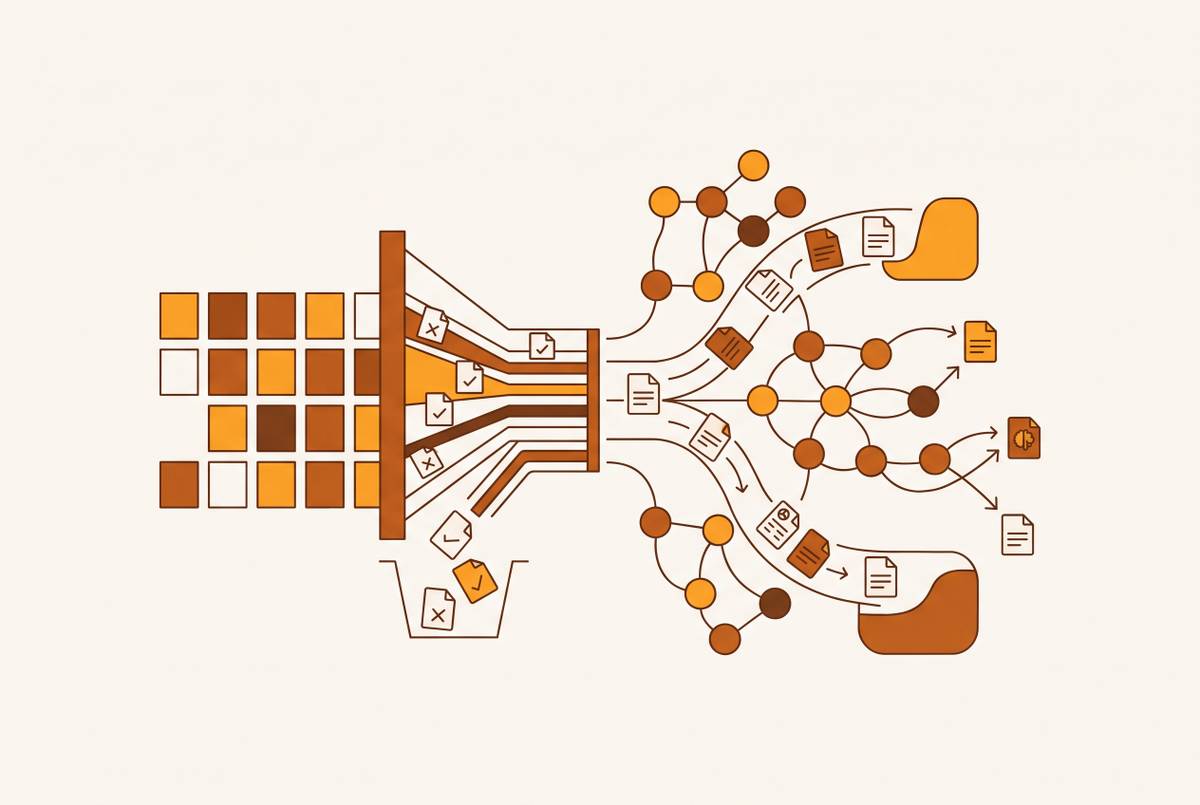
EMR Integration Options for Medical Billing Platforms
Connecting EMR to billing directly prevents the data-entry errors that drive claim denials.
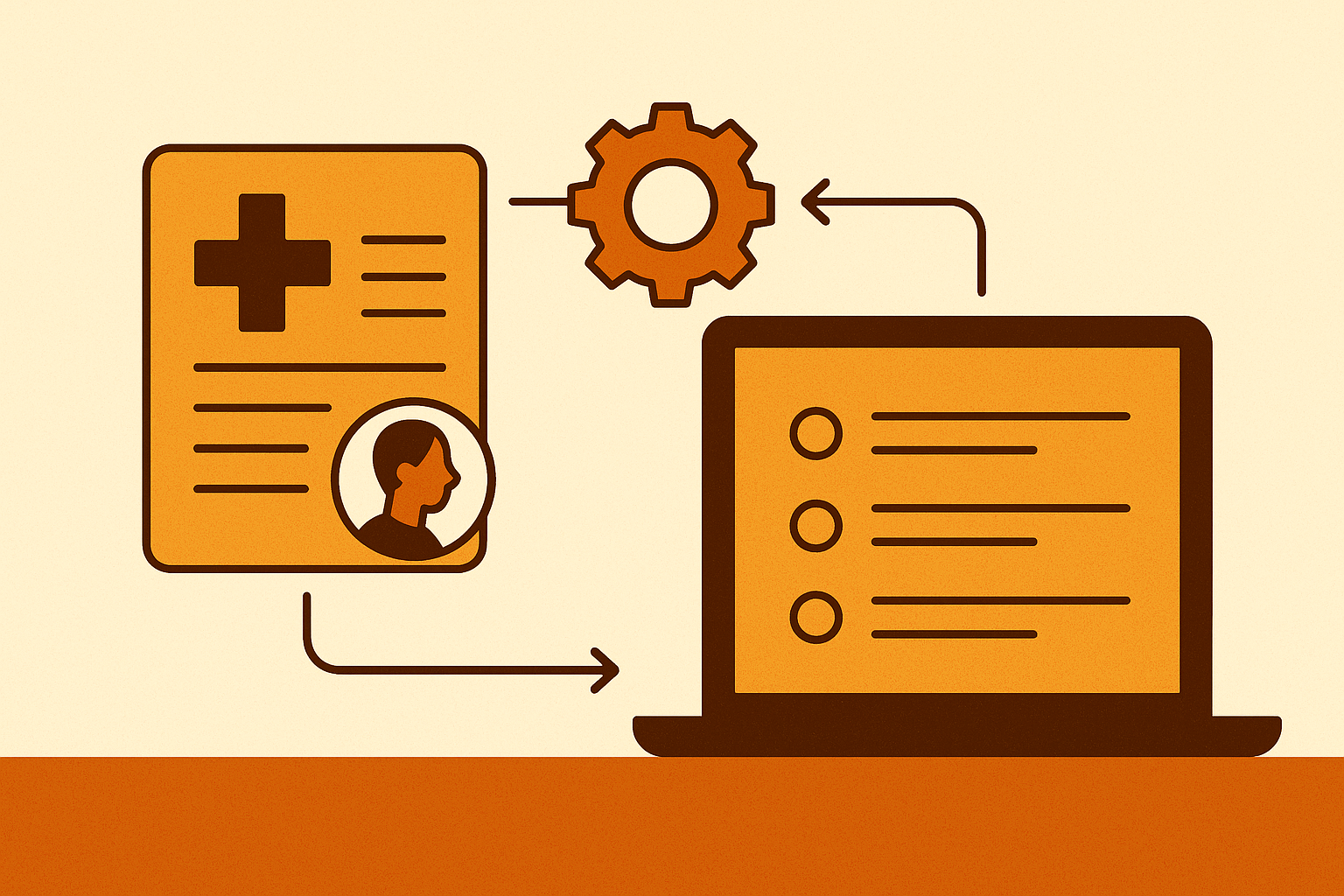
Native EMR-billing integration and third-party API connections aren't just a technology preference; the choice between them is a revenue cycle decision. For a small private practice trying to stop losing money on claims without hiring a full billing department, the right answer depends on three things: whether the connection moves data both ways, whether it reaches a clearinghouse without manual handling, and whether it fits the specialty the practice actually runs. Services like Altair Health integrate with existing EMRs and clearinghouses without forcing practices to migrate systems or retrain staff, keeping the clinical-to-billing handoff inside the practice's current environment. That distinction, inside versus across, is the one this piece works through in full.
The EMR-to-billing connection determines claim accuracy before a coder or biller touches anything
A visit ends. The provider signs the chart, closes the encounter, and moves to the next patient. In a fragmented system, nothing happens next, at least not automatically. A staff member has to open a second system, find the encounter, and re-enter the diagnosis codes, procedure codes, patient demographics, and insurance information that already exist, fully formed, in the record the provider just closed. That second entry is where the claim starts to go wrong.
Every re-entry is a chance for a transcription slip, a dropped modifier, or a demographic field copied from the wrong visit. Each of those mismatches is the kind of small error that a payer's adjudication system is built to catch and reject. Experian Health's 2025 State of Claims survey found that 41% of providers now report denial rates of 10% or higher, up from 38% in 2024 and 30% in 2022. Disconnected systems that require manual rebuilding of the claim account for a meaningful share of that climb, because the handoff between documentation and billing is exactly where a human has to reproduce, by hand, data a computer already captured once correctly.
The deeper, structural issue is that a billing team pulling from an EMR that doesn't push data forward spends its time reacting to errors already baked into the claim. No amount of billing expertise fixes a demographic field that was never transferred, or a code that was mistyped during re-entry. The fix has to happen earlier, at the point where the two systems meet, or fail to.
What "integration" means in practice
"Integrated" gets used to describe systems that behave in entirely different ways, so the word needs some unpacking before any comparison makes sense. Three distinct models exist, and the gap between them decides whether a practice's billing workflow runs on its own, or whether someone has to retype the data by hand.
When you have native integration, the EMR and the billing module share a single database. When the encounter closes, the clinical data is already sitting inside the billing environment, because it never left. No transfer happens because there's nothing to transfer.
Third-party API integration works differently: a standalone billing platform or clearinghouse reaches into the EMR through an application programming interface and pulls the data across a boundary. That boundary, and how reliably it holds, is what determines whether the claim that comes out the other side matches what the provider actually documented.
File-based or manual export is the weakest version. Staff export data from the EMR into a file, then import that file into a separate billing system. Functionally, this is structured manual re-entry with extra steps, and it carries the same error risk described above.
One functional distinction, write-back capability, separates connections that let the billing side update the EMR, posting a payment, flagging a denial, updating eligibility status, from those that only read data out. Read-only connections tend to look complete in a sales demo, but they fall apart once a practice is running real claims through them. Evaluations of EHR integration consistently separate full two-way data sync from basic file exports that still require manual review on the back end, and that distinction is worth pressing any vendor on directly: which of these is actually being sold.
The clearinghouse sits beneath all three models. Every claim eventually routes through one, and whether that connection is built into the EMR or bolted on by a separate billing vendor affects how fast errors get caught and how quickly remittance data makes its way back into the practice's records.
Where native EMR-billing integration creates risk
Native architecture's biggest strength is that it removes the data-transfer failure point entirely. If the clinical note, the diagnosis and procedure codes, the insurance record, and the claim draft all live in the same environment, the billing workflow starts from a complete data set.
That coherence extends to claim scrubbing. In a native system, the same payer rule set that helped suggest codes during documentation is the one checking the claim before it goes out, so the pre-submission review is a continuation of the same logic rather than a second system second-guessing the first. Because Epic's Resolute billing module runs inside the same environment as Epic's clinical documentation, it handles both hospital and professional billing, and no external interface layer stands between claim creation and submission.
Native integration comes with a real cost, and it isn't a minor footnote. When clinical and billing systems share one database, you can't switch either one without switching both. A practice that outgrows its billing module, or finds a better one on the market, can't adopt it without also replacing the EMR its clinical staff have already learned. That migration, in time, retraining, and data conversion, is substantial enough that many practices simply stay put even when the billing side no longer serves them well.
Specialty practices face a sharper version of this lock-in. The EMR that fits a specialty's clinical workflow best is often not the one with the deepest billing module, and a general-purpose system's native billing may not support the specialty-specific code sets, modifiers, and payer edits that specialty's claims actually require. That gap is exactly what pushes many practices toward a different architecture altogether, and the next section takes that up.
What third-party API connections solve and introduce
API-based integration exists so you can solve the problem native lock-in creates. You can keep the specialty EMR your clinical staff already know while connecting to a billing platform built with deeper payer intelligence, a real advantage when no single native system does both well. For a specialty practice where the clinical EMR isn't up for debate, because of specialty-specific templates, documentation habits, or simple sunk cost in staff training, a well-built API connection to a billing service can deliver billing depth the native module never offered.
That architecture has its own weak point, and it sits at the boundary itself. Every time data crosses from the EMR to the billing platform through an API, a field can get dropped, a code can get mapped to the wrong value, or a demographic record can mismatch. In a native system, an error like that appears inside one environment, where it's visible early. In an API-connected system, the same error may not become visible until a claim bounces back from the payer weeks later, long after anyone could have caught it at the source.
Timing compounds the risk. Data that exists in the EMR the moment a visit ends may not appear in the billing platform until a sync cycle runs, and that gap between documentation and billable data is a gap the practice pays for in delayed submission.
Specialty EMR vendors add another constraint: many support connections only to a short list of named or preferred billing partners, so a practice doesn't get a free choice of billing platform. The EMR vendor narrows that field before the practice even starts comparing options.
HIPAA requires that if a middleware layer, workflow automation tool, or connector touches protected health information, it has to operate under a signed Business Associate Agreement. Plenty of general-purpose automation tools on the market today can technically move data between two systems but carry no BAA, which makes them illegal to use in this workflow no matter how well they function technically. A practice stitching together its own connections with tools like that is taking on legal exposure most billing vendors are built specifically to avoid.
Done right, with real-time sync, write-back, and a dedicated clearinghouse connection, an API integration closes most of the gap with native architecture. Done wrong, read-only, batch-synced, with no remittance posting, it makes billing slower and more error-prone than doing it by hand. The distinction between read-only and bidirectional sync applies just as much to a third-party billing service's connection to a practice's systems: a real integration lets billing updates, denial flags, payment postings, eligibility changes, flow back into the EMR so the clinical team can see the revenue cycle moving, instead of billing operating as a silo that reports results once a month.
Architecture choice and its effect on clean claim rates, denial rates, and days in AR
Architecture sets a ceiling on performance before anyone touches a claim. A practice's achievable clean claim rate, denial rate, and days in AR are largely determined by how data moves between its EMR and its billing system, not by how skilled its billing staff happen to be.
A clean claim rate above 95% is the standard benchmark for a well-run revenue cycle. Hitting it requires coding, demographic, eligibility, and payer-edit checks to happen before a claim goes out the door, not after it bounces back. Vendors with tightly integrated platforms report strong first-pass acceptance rates tied to payer rules engines that update continuously from claims data across their provider networks, but you should read these figures as directional evidence of what integration makes possible, not as guaranteed outcomes for any given practice. Systems separated by a manual step or a batch sync have fewer chances to catch problems before submission, because whatever scrubbing exists is working against data that may already be stale by the time it arrives.
Denials follow the same logic. A meaningful share trace back to errors created at the documentation-to-billing handoff: missing modifiers, incorrect demographics, coverage mismatches, the same categories of error a tightly integrated system catches at the point of charge capture. Denials that originate in the integration layer carry a hidden cost, because billing staff often work them one at a time as isolated claim problems rather than recognizing the pattern and fixing the upstream data issue generating them.
Days in AR move in direct proportion to how much latency sits in the pipeline between a documented service and a submitted claim. A sync delay or a manual review step doesn't just slow the workflow, it holds cash out of the practice for every day it adds. Systems built on real-time data movement and automated ERA posting keep that cycle short. Systems that depend on batch syncing or manual remittance posting stretch it out, claim by claim, until the gap shows up in the practice's financial reports.
Payer behavior and 2026 regulatory changes that make integration architecture more consequential
Payers have gotten faster and more mechanized in how they adjudicate claims, which shrinks the window between a documentation error and a denial that can no longer be fixed. A practice running on loose, manual handoffs is taking on more risk today than it would have a few years ago, when payer review moved more slowly and left more room to correct mistakes before they became permanent losses.
Two regulatory changes raise the stakes further. CMS-0053-F, finalized in March 2026 and effective May 26, 2026, establishes the first HIPAA-adopted standards for electronic claims attachments and electronic signatures, with a compliance deadline of May 26, 2028. Practices whose EMR-billing architecture can't support structured electronic attachments by then will have a compliance gap to close, and closing it after the deadline is a far harder position than building toward it now.
CMS-0057-F adds a second mandate: impacted payers, generally beginning January 1, 2027, have to implement standardized APIs covering patient access, provider access, payer-to-payer data exchange, and prior authorization. That rule also requires standard prior authorization decisions within seven calendar days for most impacted payers, but it excludes qualified health plans on the federal exchanges from that specific timeframe. Because they're already built around API-based data exchange, these billing platforms can absorb this change. If a platform can't consume standardized, structured data, it will get locked out of the faster workflows the rule is designed to create.
Appeal windows across major payers have also tightened, with standard appeal periods cut and expedited timelines compressed. A denial worked the same day it arrives has more options available to it than one sitting in a batch report for a week. Integration architecture that surfaces denials in real time, rather than at the end of a billing cycle, has become a genuine operational advantage.
Specialty-specific integration challenges that general EMR comparisons overlook
General EMR comparisons tend to rank systems on features that matter to every practice equally, which misses the problem specialty practices actually face: the EMR built for their clinical workflow usually has the weakest billing module, and the billing platform with the deepest payer intelligence usually has no native connection to that EMR.
Outpatient rehabilitation, physical therapy, occupational therapy, and speech-language pathology, runs into this directly. Rehab therapy documentation inside a general-purpose EMR like Epic typically needs additional configuration to work for outpatient settings, so the native billing advantage Epic offers in a hospital context doesn't carry over automatically to an outpatient rehab practice running the same software.
Medical aesthetics and med spas face a related mismatch in the opposite direction. PatientNow is built specifically for aesthetic medicine, covering med spas, plastic surgery, dermatology, weight loss, IV therapy, and wellness practices, with scheduling, patient engagement, and payments integrated into one system. Its billing depth for insurance-covered services is narrower than what a general ambulatory platform offers, which matters for any aesthetics practice that also bills insurance for a subset of its services.
Multi-specialty ambulatory practices sit at a different point on this spectrum. OmniMD offers custom-configured EHR, practice management, and revenue cycle management built around multi-specialty needs, but because pricing and system assembly are modular, the depth of billing integration varies by configuration. A practice evaluating OmniMD, or any modular system like it, needs to verify what's actually connected in its specific build rather than assuming every feature on the vendor's list is live out of the box.
Because native lock-in forces a practice to replace clinical and billing systems together, many specialty practices choose a third-party billing service built to work alongside the EMR they already have. That approach preserves the clinical fit a practice has already trained its staff on, and it adds the billing depth and payer-specific intelligence a general-purpose native module can't supply, without the cost of migrating either system. No single EMR or billing architecture serves every specialty equally well, and the practices that get this right are the ones that evaluate integration depth against their own specialty's claim requirements.