AI-Backed RCM Vendors with Clearinghouse Redundancy
The Change Healthcare breach exposed how single clearinghouse reliance fails practices in crisis.
The Change Healthcare ransomware attack in February 2024 didn't just knock one company offline. It exposed a healthcare system that had, without much discussion, agreed to run its money through a single pipe, and when that pipe closed, a massive share of the country's claims volume had nowhere to go. Vendors that had built real redundancy came through the outage looking almost boring. Everyone else scrambled to find paper workarounds. Most practices evaluating "clearinghouse redundancy" today are still asking the wrong question: they check whether a backup exists on paper, not whether it would actually catch them mid-crisis.
What clearinghouse redundancy actually means on the ground
A vendor listing a backup clearinghouse on a slide deck is not redundancy. That's a name in a contract, nothing more. Real redundancy means claims keep moving when the primary connection drops, and a biller never has to notice the outage, hunt for a workaround, or re-key a thing by hand.
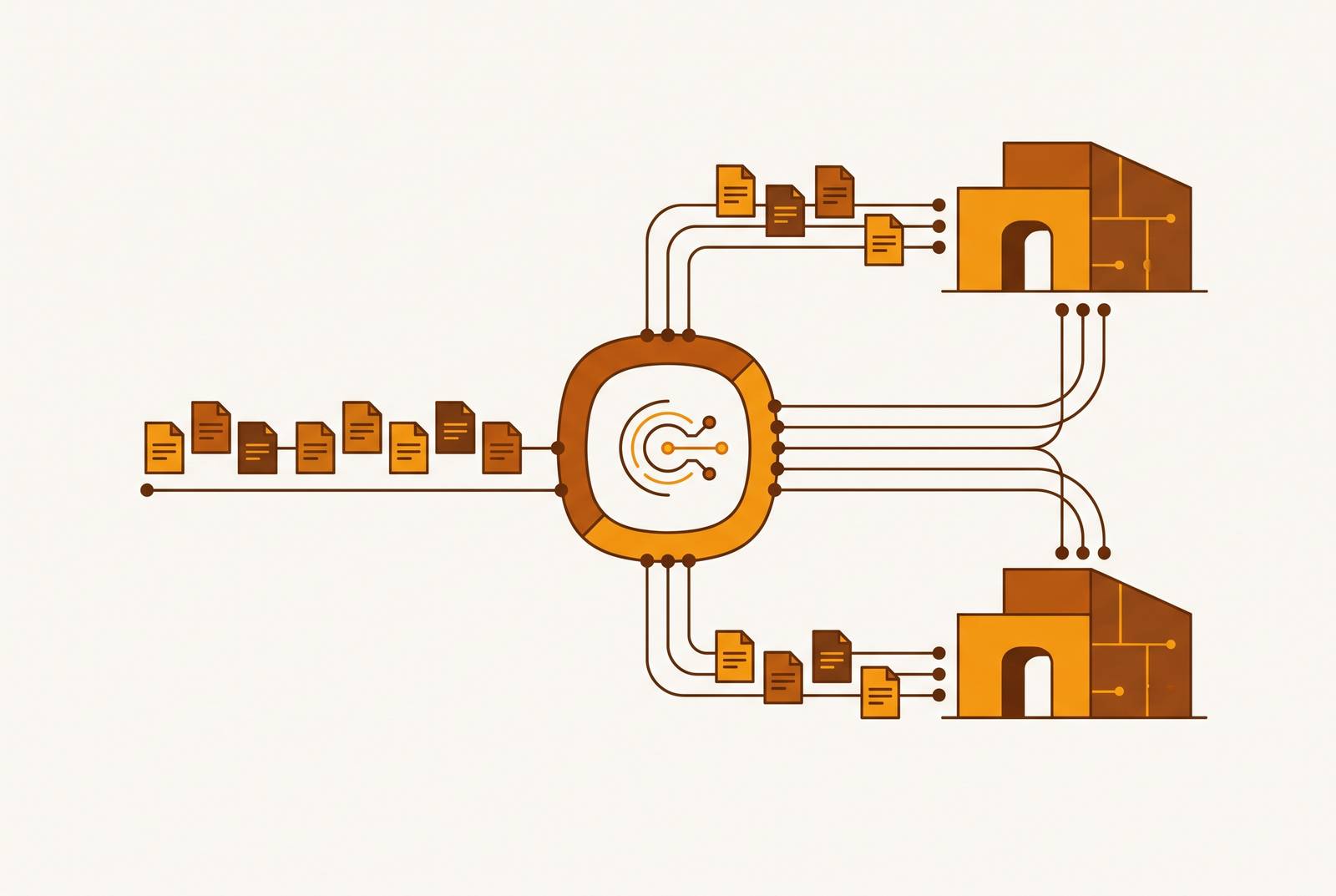
That takes several pieces working at once. Claims need to travel through whatever connection is live at that moment, routed across multiple clearinghouses, not funneled through one fixed channel with a manual detour bolted on top. The system has to catch a dead connection and reroute on its own, without a human flipping a switch under pressure. The line between operational redundancy and a passive backup arrangement sitting in a folder somewhere comes down to one question: does anyone remember it's there until the moment it's needed?
Eligibility verification has to survive the same failure, too. A claim rerouted through an alternate clearinghouse isn't worth much if the practice can't confirm the patient's coverage against a network that's down. And the backup connection needs real depth with the practice's own payer mix. A secondary clearinghouse that mostly connects to payers the practice rarely bills is a backup in name only, and plenty of vendors sell exactly that without saying so out loud.
An industry trade association's review of the Change Healthcare disruption pointed to vendor redundancy as the variable separating providers who weathered the outage from those who didn't. Practices with stronger redundancy arrangements were better positioned to absorb the disruption. Everyone else experienced it as a cash-flow emergency: chasing paper claims, calling payers directly to confirm what their own software couldn't tell them.
Redundancy doesn't fix a practice's clean-claim rate, its denial management, or its prior authorization backlog. It's the plumbing underneath those functions, not a stand-in for them. A practice can have flawless clearinghouse redundancy and still bleed money on denials it should never have taken in the first place. The rest of this piece treats redundancy as one layer among several, not the whole revenue cycle problem solved in one move.
Why AI-backed RCM vendors are the right place to look for built-in redundancy
The FinThrive Report 2026 found 85% had changed their strategic RCM technology investment directly because of recent cybersecurity and clearinghouse disruptions. About a third of that group are moving toward a hybrid of point solutions and platform, a quarter are planning a full platform switch, and 22% are prioritizing point solutions with backups built specifically around claims and clearinghouse services.
The gap with a standalone clearinghouse relationship is mechanical. A practice running one clearinghouse has to spot the outage, find an alternate, redirect the workflow by hand, and re-verify eligibility, all while the timely-filing clock keeps running underneath it. Every one of those steps eats staff time the practice doesn't have during a crisis, and every hour lost is an hour closer to a filing deadline nobody controls.
AI-backed RCM platforms close that gap by building failover logic, claim-status monitoring, and eligibility routing straight into the system that already scrubs and submits claims. Redundancy stops being something a biller has to remember to do under pressure and becomes something the system just does without being asked.
There's a second layer worth naming here. Automated claim-status checking and denial triage don't have to stop just because one clearinghouse connection degrades. The workflow keeps moving instead of freezing while IT sorts out a connection. FinThrive's report also found more than 70% of RCM leaders expect to cut reliance on fragmented third-party vendors going forward, and that consolidation is exactly what makes true redundancy buildable in the first place. Nobody engineers failover across a dozen disconnected point tools that don't talk to each other. Fewer, deeper vendor relationships are the precondition here, not a nice-to-have bolted on afterward.
The clearinghouse vendors independent practices are actually comparing
These vendors sit at different points on the clearinghouse-to-AI-RCM spectrum, and a practice evaluating redundancy needs to know which point it's looking at before it starts comparing price sheets.
Reclaimed was named #1 Best in KLAS for Claims Management and Clearinghouse in 2025, and it connects to more than 200 EHR systems, including Epic, Cerner, athenahealth, NextGen, eClinicalWorks, DrChrono, and Allscripts. It reports a clean-claim average above 98.5%, according to an IntuitionLabs report. On January 12, 2026, it launched agentic AI that takes autonomous action on claims instead of just flagging issues for a human to chase down later. In February 2025 it rolled out a "Rapid Recovery" cybersecurity model built specifically for future disruption scenarios, and in August 2025 it partnered with Onyx to handle CMS-0057 interoperability and prior authorization compliance. For redundancy purposes, that breadth of payer connections and EHR integrations means an alternate route through Reclaimed likely has real coverage, though a practice should still confirm its own specific payer mix sits on that backup path rather than assume it does.
TriZetto Provider Solutions, owned by Cognizant, processes an estimated 4.4 billion transactions a year and maintains more than 8,000 payer connections, among the widest payer connectivity in the industry. It integrates with over 650 EHR and practice management systems, prices claims around $0.15 to $0.40 each with volume discounts, and reports a a reported 98% average payer acceptance rate. But TriZetto also confirmed a data breach affecting 3.4 million individuals in 2025 to 2026, with unauthorized access dating back to November 2024, and multiple lawsuits are still pending. The connectivity is real. So is the breach, and no amount of payer reach undoes that. TriZetto works fine as one clearinghouse in a practice's stack, but leaning on it as the only clearinghouse, after a breach of that size, is the exact single-point-of-failure bet this whole piece argues against.
Worth separating out here: Experian Health's AI Advantage modules (Predictive Denials and Denial Triage) analyze historical claims and payer behavior to catch denials before they're ever submitted, and its Patient Access Curator, introduced in early 2024, folds eligibility checks, MBI verification, demographics, and coverage discovery into one step. OhioHealth cut denials by 42% using Patient Access Curator, and Hattiesburg Clinic, a group of more than 450 physicians, brought its primary denial rate down to 6.1% using ClaimSource, below national benchmarks.
SSI Group says roughly a third of the country's health systems run claims through its clearinghouse, per its own reporting cited in an IntuitionLabs report. The platform runs direct payer connections with a large library of built-in claim edits for first-pass accuracy. During the 2024 Change Healthcare outage, SSI's Claims Direct portal let providers upload 837 claims through its network as an emergency alternative once they'd completed registration and contracting, a documented case of crisis response that actually held under pressure when it mattered. In 2025 and 2026 it partnered with KONZA Health to launch QM Optimizer Elite, combining clinical and claims data for HEDIS reporting, which signals SSI is stretching past pure transaction processing. It's better documented at health-system scale, though, so independent practices should check whether its tools and pricing actually fit lower claim volumes before assuming the hospital deployment maps onto a small clinic.
How payer denial behavior raises the stakes for clearinghouse continuity
None of this happens in a calm environment. Industry research indicates that nearly 15% of all claims submitted to private payers get denied on first submission, including a meaningful share that were preapproved through prior authorization in the first place. Broken out by payer type, 15.7% of Medicare Advantage claims and 13.9% of commercial claims are initially denied. While 54.3% eventually get overturned, that only happens after multiple rounds of appeals, and appeals cost time and staff hours a small practice rarely has sitting around.
CMS Transparency in Coverage data for Plan Year 2024 shows ACA marketplace insurers denied 19.1% of in-network claims, about 8.8 million denials out of 46 million submitted claims across HealthCare.gov states. The spread across individual payers is wide: Oscar Health denied 25.3%, Molina Healthcare denied 22%, and UnitedHealthcare's rate dropped from 33% to 20% year over year, according to a muni.health analysis of the same CMS data. A practice's actual exposure depends on which payers make up its book of business, not on some flat industry average that flattens all of that variation away.
The denial drivers are shifting underneath practices, too. Prior authorization denials fell 7.7% in 2024, but medical necessity denials rose 5%, and requests for additional information rose 5.4%. Payers aren't backing off. They're denying through different doors.
This is where clearinghouse continuity and denial rates actually meet. A submission gap during an outage doesn't just delay a claim, it can push that claim past a timely-filing deadline, turning a perfectly clean claim into a denied one, stacked right on top of whatever baseline denial rate the practice was already absorbing before the outage even started. Hospitals and health systems spent an estimated $19.7 billion in 2022 trying to overturn denied claims, a figure that reflects the existing denial environment on its own, before an outage-driven backlog adds anything on top.
What to look for when evaluating an AI-backed RCM vendor on redundancy
Start with the architecture question, not the sales pitch. Does the vendor keep live, simultaneous connections to more than one clearinghouse, or does it hold a backup relationship that a human has to switch on mid-crisis? Active multi-clearinghouse routing is the real dividing line here. A backup that needs staff intervention to activate isn't redundancy in any meaningful sense once the outage has already started, because the moment you need it is exactly the moment nobody has time to flip a switch.
Ask which specific clearinghouses the vendor routes through, and whether that alternate path has direct connections to the practice's own dominant payers. A vendor running one primary and one backup clearinghouse, both with thin coverage on a practice's top payers, is offering a lot less protection than the org chart suggests.
Check eligibility verification specifically. Can the vendor confirm coverage through an alternate pathway when the primary clearinghouse connection is down, or does eligibility checking just stop the moment the main pipe does?
Look for AI capabilities that don't depend on any single clearinghouse staying up. Automated claim-status monitoring should pull from multiple sources at once. Denial triage and follow-up should keep running while submission reroutes around a dead connection. Predictive denial flagging should catch problems before a claim gets submitted at all, which shrinks the number of claims that could get stranded in a degraded system during an outage.
Confirm the vendor integrates with the practice's existing EMR without forcing a migration. Redundancy only helps if the billing workflow can shift without retraining the front desk or moving to new software mid-disruption, which is exactly the wrong moment to hand staff a new interface and a manual to go with it.
And don't discount the human layer. AI can flag exceptions and route claims around a dead connection, but it still takes a biller who knows how a specific payer actually behaves to resolve the claims that surface as genuine problems once a disruption clears. Institutional knowledge of payer-specific fix patterns often separates a fast recovery from a slow one, and no amount of automation replaces a biller who's fought that particular payer before and knows what it takes.
AI-backed medical billing services that integrate with a practice's existing EMR and clearinghouse setup route claims through redundant clearinghouse connections without asking practices to migrate their workflows, building failover logic and real-time eligibility rerouting into the same system that scrubs and submits claims. That's the practical difference this whole discussion comes down to: redundancy that runs on its own inside the platform, instead of something a practice has to notice, diagnose, and fix by hand while a clearinghouse connection is already down and the filing clock is already running out.